

Finding the right keywords is one of the most important steps in building a successful affiliate marketing website. Choosing the right keyword research tool doesn’t have to be complicated. Discover the best free and paid options for affiliate marketers and learn how to choose and use the right tool for your website.
Every article you publish starts with a question:
What is my audience searching for?
Keyword research tools help answer that question by showing you search trends, related topics, competition levels, and opportunities to create content that people are actively looking for.
But choosing the right tool can be confusing.
There are hundreds of SEO tools available, ranging from completely free options to expensive platforms used by professional marketers and agencies. As a beginner, it’s easy to assume that the most expensive tool must be the best choice.
That’s not always true.
The best keyword research tool is the one that helps you understand your audience, discover valuable topics, and create better content.
A beginner building their first affiliate website has very different needs than an established business managing thousands of pages.
In this guide, we’ll look at some of the best keyword research tools available for affiliate marketers, including free and paid options. I’ll explain what each tool does best, who it’s designed for, and how it fits into a practical content strategy.
Before choosing a tool, remember this:
Tools don’t create successful websites. People do.
A keyword research tool can provide valuable information, but the real advantage comes from knowing how to interpret that information and turn it into helpful content.
Be sure to read Keyword Research for Beginners.
Why Keyword Research Tools Matter for Affiliate Marketing
Successful affiliate marketing begins with understanding your audience.
Before someone clicks an affiliate link, they usually go through a process:
- They recognize a problem or need.
- They search for information.
- They compare possible solutions.
- They make a decision.
Keyword research tools help you understand each step of that journey.
For example, someone interested in starting a website might search:
- How to start a website
- Best website platforms for beginners
- WordPress vs. Wix
- Best hosting for bloggers
Each search represents a different level of interest and intent.
A keyword research tool helps you discover these opportunities so you can create content that matches what people are already looking for.
Keyword Tools Help You Avoid Guessing
Without keyword research, many beginners create content based on what they think people want.
Sometimes those ideas are good.
Sometimes nobody is searching for them.
Keyword tools provide data that helps you make more informed decisions.
They can help you discover:
- Topics people are searching for.
- Related questions.
- Search trends.
- Potential competition.
- Content gaps.
- Long-tail keyword opportunities.
This doesn’t mean you should blindly follow every number a tool provides. Instead, use the information as a guide to better understand your audience.
Keyword Tools Support Your Entire Content Strategy
A good keyword research process helps with more than individual articles.
It can help you build an entire content plan.
For example, an affiliate marketing website might discover these related topics:
- How to start affiliate marketing
- Best affiliate programs for beginners
- SEO for affiliate marketing
- Keyword research for beginners
- How to write blog posts that rank
These topics can become a connected group of articles that support one another through internal linking.
Over time, this helps build topical authority and gives search engines a clearer understanding of your website.
What Should You Look for in a Keyword Research Tool?
Before comparing specific tools, it’s important to understand what information actually matters.
A tool with dozens of features isn’t automatically better. The best tool is the one that helps you make better content decisions.
Here are the most important features to consider.
Keyword Suggestions
A good keyword tool should help you discover new ideas.
Look for tools that provide:
- Related keywords
- Long-tail variations
- Question-based searches
- Topic ideas
The goal is not simply finding one keyword. It’s discovering opportunities.
Search Intent Information
Understanding why someone searches for something is just as important as knowing what they search for.
A good tool should help you identify whether a keyword is:
- Informational
- Commercial
- Transactional
This helps you create the right type of content.
Competition Analysis
Competition data can help you determine whether a keyword is realistic for your website.
For newer websites, finding lower-competition opportunities is often more valuable than chasing high-volume keywords.
Search Volume Estimates
Search volume can provide helpful context, but it should never be the only factor you consider.
A keyword with lower search volume but strong intent can often be more valuable than a broad keyword with thousands of searches.
Content and SERP Analysis
Some tools allow you to analyze the pages currently ranking for a keyword.
This helps answer questions like:
- What type of content is ranking?
- How detailed are the top results?
- Can I create something better?
- What topics are missing?
This type of analysis is often more valuable than the keyword number itself.
View the article SEO for Affiliate Marketing (Beginner’s Step-by-Step System).
Free Keyword Research Tools for Affiliate Marketing
If you’re just getting started with affiliate marketing, you don’t need to spend a lot of money on SEO software.
In fact, I’d recommend learning the fundamentals with free tools before investing in a premium subscription. You’ll develop a much better understanding of what the numbers mean and which features actually matter to you.
Here are several free tools worth knowing.
Google Search
Sometimes the simplest tool is one of the most useful.
Start typing a topic into Google and pay attention to the autocomplete suggestions. These can reveal specific phrases people commonly search for and give you ideas for long-tail keywords.
You can also search your topic and look at:
- Related searches
- “People also ask” questions
- The types of pages ranking on the first page
- Related topics appearing throughout the results
This isn’t traditional keyword research software, but it is an excellent way to understand what people are actually looking for.
And there’s an important advantage: you’re looking directly at the search results you’re trying to rank in.
Google Search Console
Once your website has been indexed and is receiving search impressions, Google Search Console becomes one of your most valuable free SEO resources.
Search Console can show you the queries for which your pages are appearing, along with information such as clicks, impressions, click-through rate, and average position.
This creates opportunities you can’t always discover with a traditional keyword research tool.
For example, you might discover that an article you wrote for one topic is also receiving impressions for several related searches.
That can lead to opportunities to:
- Improve an existing article.
- Expand a section.
- Add relevant internal links.
- Create a related article.
- Improve the page’s title or description.
This is one reason I recommend Search Console even if you eventually invest in a premium SEO platform.
You’re working with data from your own website, rather than relying entirely on estimates.
Google Keyword Planner
Google Keyword Planner was created primarily for advertisers, but it can also be useful for SEO research.
You can enter a broad topic and discover related keyword ideas, along with search-volume information and other advertising-related data.
It’s particularly useful when you’re trying to understand whether people are searching for different variations of a topic.
One thing to remember is that Keyword Planner isn’t designed specifically for organic SEO. Its competition metrics relate to advertising, so don’t confuse Google’s advertising competition score with organic keyword difficulty.
Use it as one piece of your research rather than treating its numbers as a final decision.
Google Trends
Google Trends is another free resource that’s easy to overlook.
Instead of focusing on a single monthly search-volume number, Trends lets you see how interest in a topic changes over time.
This can be particularly useful for affiliate marketers because some topics are seasonal.
For example, searches for camping equipment may increase during certain times of the year, while other topics may have consistent interest year-round.
Google Trends can help you identify:
- Seasonal topics
- Growing topics
- Declining topics
- Geographic differences
- Related search trends
- Differences between similar keywords
This information can influence when you publish content as well as what you publish.
AnswerThePublic
AnswerThePublic is useful when you’re trying to discover the questions and concerns surrounding a topic.
Instead of simply giving you a list of keywords, it can help uncover different ways people formulate questions and searches.
That’s particularly valuable for affiliate marketers because questions often reveal the problems people are trying to solve.
For example, someone searching for camping equipment might also ask:
- What camping stove is easiest for beginners?
- What size tent do I need?
- What should I look for in a camping stove?
- What camping gear do I actually need?
Each question can become a section within an article—or potentially an entirely separate article if the topic deserves deeper coverage.
Free Keyword Generators and Freemium Tools
Many third-party tools offer limited keyword research without requiring a paid subscription.
Examples include free or limited versions of:
- Ahrefs Keyword Generator
- Ubersuggest
- Semrush keyword research tools
- Keyword Tool
- Other niche keyword suggestion tools
These can be useful for generating additional ideas and getting a different perspective on a topic.
However, remember that free versions often limit the number of searches, results, or metrics available.
That’s not necessarily a problem.
You don’t need to use ten different tools to research one article.
My Recommended Free Tool Stack
If you’re a beginner and want to keep things simple, I’d start with just a few resources:
Google Search → Find real search questions and examine the competition.
Google Keyword Planner → Explore keyword variations and search demand.
Google Trends → Check whether interest is growing, declining, or seasonal.
Google Search Console → Discover what your own website is already appearing for.
One additional keyword tool → Expand your ideas and get additional competitive information.
That’s enough to build a useful keyword research process without paying for an expensive subscription.
The important thing isn’t how many tools you use.
It’s how well you interpret the information they provide.
Free Doesn’t Mean Limited
One of the biggest misconceptions beginners have is that they need a premium SEO platform before they can compete.
You don’t.
A paid tool can save time and provide more advanced data, but it doesn’t replace good judgment.
You can still:
- Find valuable topics.
- Analyze search intent.
- Study competing pages.
- Discover long-tail keywords.
- Build content clusters.
- Improve existing articles.
All without paying for a keyword research subscription.
Once your website grows and you’re regularly publishing content, you may eventually decide that a paid tool is worth the investment.
But by then, you’ll have a much better understanding of why you need it and which features will actually save you time.
Best Paid Keyword Research Tools for Affiliate Marketing
Free tools can take you surprisingly far, but there comes a point when a paid keyword research platform can save you significant time.
Premium tools generally provide larger keyword databases, deeper competitor analysis, more detailed SERP information, rank tracking, backlink data, and additional SEO features.
The question isn’t whether these tools are powerful. Many of them are.
The real question is:
Do you need that power yet?
If you’re publishing your first few articles, paying for an expensive SEO platform may not be the best use of your money. If you’re managing a large affiliate website with hundreds of articles, however, the ability to research competitors, find content gaps, and analyze keywords at scale can be extremely valuable.
Here are several paid tools worth considering.
Ahrefs
Ahrefs is one of the most established SEO platforms available and is particularly well known for keyword research, competitor analysis, and backlink data.
Its keyword research capabilities allow you to explore search volume, keyword difficulty, related terms, traffic potential, SERP information, and other data that can help you evaluate content opportunities. Current 2026 comparisons continue to rank Ahrefs among the strongest overall options for comprehensive keyword research and SEO analysis.
For affiliate marketers, one of its biggest advantages is that keyword research doesn’t happen in isolation. You can investigate competitors, examine their content, research backlinks, and look for opportunities your own website may be missing.
Best for: Serious affiliate marketers, established websites, and users who want deep SEO and competitor analysis.
Potential drawback: The cost can be difficult to justify when you’re just starting out.
Semrush
Semrush is another major all-in-one SEO and digital marketing platform.
Its Keyword Magic Tool provides extensive keyword discovery, filtering, search-volume information, keyword difficulty, intent data, and competitive research. Semrush also goes well beyond keyword research with tools for site audits, rank tracking, competitor analysis, content marketing, and other areas of digital marketing.
One of its strengths is the amount of information available within a single platform.
If you’re managing multiple websites or want a broad SEO toolkit rather than a simple keyword finder, Semrush can be a powerful option.
Best for: Affiliate marketers who want an all-in-one SEO and marketing platform.
Potential drawback: The extensive feature set and higher price can be more than a beginner needs.
Ubersuggest
Ubersuggest takes a more approachable approach to SEO research.
It provides keyword ideas, search-volume estimates, SEO difficulty information, content ideas, competitor research, and site-audit capabilities.
One of its biggest advantages for beginners is simplicity. You can get useful keyword and SEO information without facing the enormous number of features found in enterprise-level platforms.
Current 2026 comparisons continue to position Ubersuggest as a lower-cost entry point for bloggers, small websites, and beginners who want more capability than free tools provide without immediately moving into the price range of Ahrefs or Semrush.
Best for: Beginners, bloggers, and affiliate marketers who want a more affordable paid option.
Potential drawback: Its data depth and competitive research capabilities aren’t comparable to the largest professional platforms.
Mangools / KWFinder
Mangools is another option worth considering if you’re looking for a simpler SEO experience.
Its KWFinder tool focuses heavily on keyword discovery and finding relatively accessible opportunities. Mangools also includes additional SEO tools for SERP analysis, rank tracking, backlink research, and competitor analysis.
Its straightforward interface can make it appealing to people who find larger platforms overwhelming. Current 2026 comparisons continue to identify KWFinder as a beginner-friendly option in the middle of the market.
Best for: Beginners who want a focused, easier-to-learn SEO toolkit.
Potential drawback: You won’t get the same depth or scale as the largest enterprise platforms.
LowFruits
LowFruits takes a somewhat different approach.
Rather than simply giving you enormous lists of keywords, its focus is on identifying lower-competition opportunities where smaller websites may have a realistic chance of ranking.
That can be particularly interesting for affiliate marketers because newer websites often don’t need millions of keyword suggestions—they need good opportunities they can actually compete for.
Current 2026 discussions and comparisons frequently highlight LowFruits for this type of low-competition keyword discovery.
Best for: Niche affiliate sites and publishers focused on finding lower-competition keywords.
Potential drawback: It’s more specialized than a full all-in-one SEO platform.
Paid Doesn’t Automatically Mean Better
This is one of the most important points I want beginners to understand.
A $100-plus monthly SEO subscription doesn’t automatically make your content better.
The software can provide more data, but you still have to make the decisions.
You still need to determine:
- Whether the topic fits your website.
- What the searcher actually wants.
- Whether you can create a better resource.
- How the article fits into your content cluster.
- Whether the potential traffic is valuable to your audience.
In other words, a premium tool can make research faster and deeper, but it can’t replace good judgment.
Don’t Buy Multiple Tools That Do the Same Thing
Another common mistake is subscribing to several SEO platforms at once.
You might think:
“If one tool is good, three must be better.”
Usually, they’re not.
Ahrefs, Semrush, Ubersuggest, Mangools, and other platforms overlap considerably in their basic keyword research functions.
Instead of paying for several subscriptions, choose the tool that best fits your current workflow.
If your needs change later, you can always switch.
When Should You Upgrade to a Paid Tool?
I’d consider a paid tool when one of these situations applies:
You’re publishing consistently.
If you’re regularly researching and writing content, a better tool can save significant time.
You’re running out of ideas.
Premium databases can uncover keyword variations and related opportunities you may not find through free research.
You’re studying competitors.
If you want to understand which keywords competing websites rank for, paid platforms become much more useful.
Your website is growing.
As your content library expands, advanced reporting, rank tracking, site audits, and competitor analysis can become increasingly valuable.
You’re earning enough to justify the expense.
This is particularly important for affiliate marketers.
Your SEO software is a business expense. It should eventually provide enough value to justify its cost.
Which Keyword Research Tool Is Right for You?
After looking at all of these options, you may still be wondering:
Which one should I actually use?
The answer depends less on which tool has the most features and more on where you are in your affiliate marketing journey.
You don’t need the same SEO software on your first day that you might eventually use when you’re managing hundreds of articles.
Here is a simple way to think about it.
If You’re Just Starting: Use Free Tools
If your website is new and you’re still learning how SEO and keyword research work, I recommend starting with free resources.
A simple combination of:
- Google Search
- Google Search Console
- Google Keyword Planner
- Google Trends
can teach you a tremendous amount.
You can discover topics, study search results, identify questions, monitor your own rankings, and begin understanding how people search for information.
At this stage, your biggest limitation probably isn’t the software.
It’s experience.
Learning how to evaluate search intent and recognize a worthwhile topic is much more important than having access to thousands of advanced metrics.
If You Want an Affordable Paid Tool: Consider Ubersuggest or KWFinder
Once you’re comfortable with the basics and want more keyword data without jumping into an expensive professional platform, a budget-friendly tool may make sense.
Ubersuggest is appealing if you want a straightforward interface with keyword research, competitor information, and additional SEO features.
KWFinder, through Mangools, is another beginner-friendly option if your primary goal is discovering and evaluating keywords without dealing with an enormous all-in-one platform.
Current comparisons commonly position both as more accessible alternatives to the larger professional suites.
For many individual bloggers and small affiliate websites, that’s enough.
If Your Main Goal Is Finding Low-Competition Keywords: Consider LowFruits
If you’re building a newer affiliate website and your biggest challenge is finding keywords you can realistically compete for, LowFruits is worth investigating.
Its approach is more focused on identifying lower-competition opportunities rather than simply giving you an enormous database of keywords.
That’s an important distinction.
A massive keyword database isn’t necessarily useful if most of the opportunities are far beyond your website’s current ability to compete.
For a newer niche site, finding a smaller number of realistic opportunities can be much more valuable.
If You’re Building a Serious SEO Business: Consider Ahrefs or Semrush
Once your website becomes established—or if you’re managing multiple sites—your needs may change.
This is where tools such as Ahrefs and Semrush become much more compelling.
Both provide extensive keyword research capabilities along with competitor analysis, rank tracking, site auditing, and other advanced SEO functions. Current 2026 comparisons continue to place them among the leading professional SEO platforms.
Choose Ahrefs if deep SEO research, content analysis, and backlink intelligence are particularly important to your workflow.
Choose Semrush if you want a broad marketing platform with strong SEO, competitive research, and additional digital marketing capabilities.
Neither is automatically the right choice for everyone.
A Simple Decision Guide
| Your Situation | Recommended Starting Point |
|---|---|
| Brand-new website | Google Search + free Google tools |
| Learning SEO | Free tools first |
| Small affiliate site | Ubersuggest or KWFinder |
| Looking for low-competition keywords | LowFruits |
| Growing content website | Consider a paid platform |
| Multiple established websites | Ahrefs or Semrush |
| SEO professional or agency | Ahrefs or Semrush |
These aren’t hard rules.
They’re simply a starting point.
Your needs can change as your website grows.
Don’t Let the Tool Become the Strategy
There’s an important lesson I’d like you to remember.
It’s easy to spend hours inside an SEO platform looking at:
- Search volume
- Keyword difficulty
- Traffic estimates
- Domain authority
- Competition scores
- Cost-per-click
- Hundreds of keyword variations
You can end up with a spreadsheet containing thousands of keywords and still have no idea what article to write.
That’s not effective keyword research.
The purpose of the tool is to help you make a better decision.
For every promising keyword, ask:
Does this topic fit my audience?
Does it match what the searcher wants?
Can I create something genuinely useful?
Is this realistic for my website?
Does it connect naturally with my existing content?
If the answer is yes, you’ve found something worth pursuing.
The tool simply helped you get there.
My Recommendation for Most Beginners
If you’re reading this because you’re building your first affiliate website, here’s what I would do.
Don’t buy an expensive SEO subscription immediately.
Start with free tools.
Learn how to research keywords.
Study the search results.
Understand search intent.
Write articles.
Watch what happens.
Use Google Search Console to see which searches your content begins appearing for.
As your skills and website grow, you’ll eventually recognize where your current process is taking too much time or where you need better data.
That’s when you upgrade.
At that point, you’re not buying an SEO tool because somebody told you that you need one.
You’re buying it because you’ve identified a problem it can solve.
That’s a much better way to spend your money.
The Best Keyword Research Tool Is the One You Actually Use
There’s no single keyword research tool that’s perfect for every affiliate marketer.
The best choice depends on your:
- Experience
- Budget
- Website size
- SEO goals
- Content strategy
- Need for competitive research
A beginner with a new website can accomplish a lot with free tools.
A growing affiliate site may benefit from a budget-friendly platform.
An established website or SEO professional may need the depth of a full professional suite.
Don’t feel pressured to start at the top.
Start where you are.
Learn the fundamentals, build your website, publish helpful content, and let your needs determine when it’s time to invest in more advanced tools.
That’s how you turn keyword research software from an expense into a useful part of your affiliate marketing system.
My Approach: Start Simple, Upgrade When Necessary
If you’re building your first affiliate website, I wouldn’t recommend starting with the most expensive SEO platform available.
Begin with the free tools we’ve already discussed.
Learn how to:
- Find keyword ideas.
- Understand search intent.
- Analyze the search results.
- Evaluate competition.
- Create helpful content.
- Track how your pages perform.
Once you’ve developed those skills and your website starts producing meaningful traffic, you’ll have a much better idea of what information you’re missing.
That’s the point when a paid tool becomes much more useful.
Instead of buying software because someone tells you that “serious SEO requires it,” you’ll buy it because you’ve identified a specific problem the software needs to solve.
That’s a much better investment decision.
How I Would Build a Keyword Research Workflow
1. Start with Google Search
↓
2. Expand ideas with a keyword tool
↓
3. Check search intent and current results
↓
4. Evaluate competition
↓
5. Choose the best topic
↓
6. Create the article
↓
7. Track performance in Search Console
Common Keyword Research Mistakes
Having access to a keyword research tool doesn’t automatically make keyword research easier.
In fact, beginners can sometimes become overwhelmed by the amount of information these tools provide. Search volume, keyword difficulty, traffic estimates, competition scores, and hundreds of related keywords can make it tempting to focus on numbers instead of the people behind those searches.
Here are some of the most common mistakes to avoid.
Mistake #1: Choosing Keywords Based Only on Search Volume
A keyword with thousands of monthly searches can look incredibly attractive.
But high search volume doesn’t necessarily mean it’s a good keyword for your website.
High-volume keywords are often broad and highly competitive. Established websites may already dominate the search results, making it difficult for a newer site to compete.
A more specific keyword with lower search volume may actually be a better opportunity if:
- It closely matches your audience.
- The search intent is clear.
- The competition is reasonable.
- You can create an excellent resource.
- The visitor is likely to take an action that supports your business.
Don’t ask only:
“How many people search for this?”
Also ask:
“How valuable is this search to my website?”
Mistake #2: Treating Keyword Difficulty as a Guarantee
Keyword difficulty scores can be useful, but they are estimates.
Different SEO tools calculate difficulty differently, and none of them can guarantee whether your article will rank.
A keyword labeled “easy” isn’t automatically easy.
Likewise, a keyword labeled “difficult” isn’t necessarily impossible.
Use difficulty scores as one piece of evidence alongside:
- The current search results.
- The authority of competing websites.
- The quality of competing content.
- Search intent.
- Your own website’s authority.
- Your ability to create something better.
Always look at the actual search results.
The SERP can tell you things a single difficulty number cannot.
Mistake #3: Ignoring Search Intent
A keyword can look perfect on paper and still be the wrong target for your article.
Suppose you find a keyword related to a product you’re promoting.
Before writing, search the phrase yourself.
What appears?
Are the results:
- Product reviews?
- Comparison articles?
- Tutorials?
- Buying guides?
- Category pages?
- Videos?
- Informational articles?
The search results provide clues about what Google believes searchers want.
If most of the top results are detailed buying guides and you publish a short informational article, you may be missing the intent behind the search.
Match your content to the searcher’s goal.
Mistake #4: Chasing Every Keyword Your Tool Finds
Keyword research tools can generate thousands of ideas.
That’s both their strength and their weakness.
You don’t need to publish an article for every keyword.
Instead, group closely related keywords into broader topics and determine which searches can be answered by the same piece of content.
For example, these searches might all belong in one comprehensive article:
- best camping stoves for beginners
- best camping stove for beginners
- beginner camping stove
- camping stove for new campers
Creating four thin articles simply because your tool displays four keywords isn’t necessarily better.
One excellent article may serve all of them.
Mistake #5: Forgetting About Your Website
A keyword might be excellent in general but still be a poor choice for your particular website.
Before selecting a topic, ask:
Does this belong on my site?
Think about:
- Your audience.
- Your niche.
- Your existing content.
- Your expertise.
- Your affiliate opportunities.
- Your long-term content strategy.
A keyword research tool doesn’t know your business as well as you do.
That’s why your judgment remains important.
Mistake #6: Using Too Many Tools
It’s tempting to subscribe to multiple SEO platforms.
You might think that comparing five different tools will give you a more accurate answer.
Sometimes it simply creates more confusion.
Different tools may show different:
- Search volumes.
- Difficulty scores.
- Traffic estimates.
- Keyword variations.
That doesn’t necessarily mean one tool is wrong.
SEO data is often estimated and modeled differently from one platform to another.
Pick one primary tool and learn how to use it well.
You can supplement it with free resources such as Google Search, Google Trends, and Google Search Console.
Mistake #7: Ignoring Long-Tail Keywords
Beginners often focus on short, broad keywords because they look more impressive.
For example:
“Camping tents”
is much broader than:
“best 2 person tent for beginners”
The longer search may have less volume, but it also provides much more information about what the searcher wants.
Long-tail keywords can help you discover:
- Specific questions.
- Specific problems.
- Product comparisons.
- Beginner needs.
- Stronger purchase intent.
They’re particularly useful for newer affiliate websites because they can provide more focused opportunities.
Mistake #8: Assuming Every Keyword With Buyer Intent Is Valuable
Commercial keywords can be attractive to affiliate marketers because they may lead to product clicks and commissions.
But don’t automatically assume a keyword is valuable just because it contains words such as:
- Best
- Review
- Comparison
- Top
- Buy
Consider the actual audience and potential value.
A highly competitive commercial keyword may be much harder to rank for than a related informational keyword that helps you attract the same audience earlier in their decision-making process.
A strong affiliate content strategy usually includes both informational and commercial content.
Mistake #9: Forgetting to Revisit Your Research
Keyword research shouldn’t be a one-time activity.
Search behavior changes.
New products appear.
Old products disappear.
Trends develop.
Your website gains authority.
And your own Search Console data gives you information that wasn’t available when you originally planned an article.
That’s why it’s worth periodically revisiting your keyword research.
An article that originally targeted one topic may begin receiving impressions for several related searches.
Those discoveries can lead to opportunities to improve the article or create supporting content.
Mistake #10: Letting the Tool Control Your Content Strategy
This may be the biggest mistake of all.
A keyword research tool should support your content strategy—not replace it.
Don’t build your entire website around whatever keywords happen to have the highest numbers in your software.
Start with your audience.
Understand their problems.
Identify the questions they are asking.
Next, use keyword research tools to find out how individuals look for those solutions.
That’s a much more sustainable approach.
Your audience should drive your strategy. Your tools should help you execute it.
The Goal Isn’t to Find the Perfect Keyword
There is no magical keyword that guarantees traffic, rankings, or affiliate commissions.
Successful keyword research is about finding good opportunities that fit your audience, your website, and your ability to create genuinely useful content.
By steering clear of these common errors, you’ll be ahead of many newcomers who get caught up in numbers and forget to see the bigger perspective.
And once you have a tool and know what to look for, the next question becomes much more practical:
How do you actually use the tool to plan your next article?
That’s what we’ll tackle in Your Keyword Research Tool Action Plan next.
Your Keyword Research Tool Action Plan
Choosing a keyword research tool is only the beginning.
The real value comes from knowing how to use it to make better content decisions.
You don’t need a complicated process. In fact, I recommend keeping your workflow simple, especially when you’re just starting.
Here’s a practical system you can use every time you plan a new article.
Step 1: Start With Your Audience
Before opening a keyword research tool, start with your reader.
Ask:
- What problem are they trying to solve?
- What question might they have?
- What information would help them make a decision?
- What would I search for if I were in their position?
Write down several topic ideas.
Don’t worry about search volume yet.
You’re starting with people, not numbers.
Step 2: Turn Your Topic Into Keyword Ideas
Now enter your topic into your chosen keyword research tool.
Look for:
- Related keywords
- Long-tail variations
- Questions
- Comparisons
- Product-related searches
- Beginner-specific phrases
At this stage, don’t try to find the perfect keyword.
Build a list of possibilities.
Step 3: Check the Search Results
This is one of the most important steps in the entire process.
Take your strongest keyword ideas and search for them in Google.
Look carefully at the results.
Ask:
What type of content is ranking?
Are you seeing:
- Beginner guides?
- Product reviews?
- Comparison articles?
- Tutorials?
- List posts?
- Videos?
- Forums?
Then ask:
Can I create something genuinely better or more useful?
Don’t skip this step simply because your keyword tool provides a difficulty score.
The actual search results are often more informative than a single number.
Step 4: Evaluate the Keyword
Now bring the information together.
For each promising keyword, consider:
Relevance: Does it fit my audience and website?
Search intent: Does it match the type of article I want to create?
Competition: Does my website have a realistic opportunity?
Search demand: Are enough people searching for this topic to make it worthwhile?
Business value: Could this visitor eventually become a subscriber, customer, or affiliate referral?
You don’t need perfect numbers.
You’re looking for the best overall opportunity.
Step 5: Choose a Primary Topic
Once you’ve evaluated your options, choose one primary topic for the article.
Don’t try to target ten unrelated keywords at once.
Your primary keyword or topic should give the article a clear focus.
Then identify closely related keywords and questions that can naturally be addressed within the same article.
This gives you a focused article without forcing you to repeat the same keyword over and over.
Step 6: Build the Article Around the Searcher’s Needs
Now it’s time to write.
Use your keyword research to help determine what the reader needs—not to dictate every sentence.
Create an outline that answers the main question and the natural follow-up questions a reader is likely to have.
For example:
Primary topic
↓
What it is
↓
Why it matters
↓
How to do it
↓
Common mistakes
↓
Practical recommendations
↓
Next steps
The exact structure will vary depending on the search intent.
The goal is to make the article feel like a complete answer.
Learn how to write blog posts that actually rank.
Step 7: Add Related Topics Naturally
As you write, look for opportunities to address closely related questions.
You may discover that your keyword research revealed several useful subtopics.
Include them where they genuinely help the reader.
Don’t force them into the article simply because your tool listed them.
Write for humans first.
If a related topic deserves its own detailed article, make a note of it instead.
That can become a future piece of content and an opportunity for internal linking.
Step 8: Create Internal Links
Before publishing, look at your existing content.
Ask:
Which articles on my website are related to this topic?
Add relevant internal links where they help the reader continue learning.
Then think about the future:
What articles should I eventually create to support this one?
This is how individual keyword research decisions eventually become a connected content strategy.
Step 9: Publish and Track the Results
Once your article is published, your research isn’t finished.
Use tools such as Google Search Console to monitor:
- Impressions
- Clicks
- Search queries
- Average position
- Click-through rate
You may discover that your article begins appearing for keywords you didn’t originally target.
That’s valuable information.
Those unexpected searches can reveal new content opportunities or show you where an article could be expanded.
Step 10: Improve What You Learn
SEO is an ongoing process.
After your article has had time to collect data, revisit it.
Ask:
- What keywords am I appearing for?
- Which searches are generating impressions?
- Are there questions I haven’t answered?
- Can I improve the introduction?
- Should I add internal links?
- Does the article still accurately reflect the topic?
- Is there a related article I should create?
Then make improvements where they genuinely benefit the reader.
A Simple Keyword Research Workflow
If you want to simplify everything we’ve covered into one repeatable process, use this:
1. Choose a topic your audience cares about.
↓
2. Generate keyword ideas.
↓
3. Check search intent.
↓
4. Study the current search results.
↓
5. Evaluate competition and search demand.
↓
6. Choose your primary topic.
↓
7. Build the article around the reader’s needs.
↓
8. Add related topics and internal links.
↓
9. Publish and track performance.
↓
10. Improve the content using what you learn.
That’s it.
You don’t need a complicated spreadsheet or an expensive SEO platform to follow this process.
A quality keyword research tool speeds up some of these steps and provides extra information to utilize.
Your Goal Is Better Decisions, Not More Data
This is worth repeating because it’s easy to forget.
A keyword research tool can give you more data than you’ll ever need.
But more data doesn’t automatically lead to better results.
Your goal isn’t to collect thousands of keywords.
Your goal is to identify the topics that are most useful to your audience and most appropriate for your website.
Once you understand that, keyword research becomes much less overwhelming.
You stop asking:
“Which keyword has the biggest numbers?”
And start asking:
“Which topic gives me the best opportunity to help my audience?”
That’s the mindset that turns keyword research from a technical SEO task into a genuine content strategy.
Conclusion: Choose the Tool That Fits Your Strategy
Keyword research tools can make the process of planning content faster, easier, and more informed.
But they aren’t the reason an affiliate website succeeds.
The real value comes from knowing how to use the information those tools provide.
You don’t need the most expensive SEO platform.
You don’t need access to thousands of keywords.
And you certainly don’t need to subscribe to every tool you see recommended online.
What you need is a reliable process.
Start by understanding your audience.
Find the questions and problems they’re trying to solve.
Use keyword research tools to discover how people are searching for those topics.
Study the search results.
Evaluate competition and search intent.
Then create content that genuinely helps the person who lands on your page.
That’s the part no software can do for you.
Discover how to get traffic to a new website.
Start With What You Have
If you’re just starting your affiliate website, don’t let the cost of SEO software become an obstacle.
Google Search, Google Trends, Google Keyword Planner, and Google Search Console can provide an impressive amount of useful information without requiring a paid subscription.
Learn how to use those resources first.
As your website grows, you may discover that you’re spending too much time researching keywords or that you need more advanced competitive data.
That’s when a paid tool can make sense.
Whether you eventually choose Ubersuggest, KWFinder, LowFruits, Ahrefs, Semrush, or another platform, the goal should be the same:
Use the tool to make better decisions.
Don’t Let SEO Tools Replace Your Judgment
One of the easiest mistakes to make is becoming obsessed with numbers.
Search volume.
Keyword difficulty.
Traffic estimates.
Competition scores.
These metrics are useful, but they’re not the complete story.
A keyword with modest search volume may be an excellent opportunity if it perfectly matches your audience.
A keyword with thousands of searches may be a terrible choice if it’s too competitive or doesn’t fit your website.
Your experience, understanding of your audience, and ability to create genuinely useful content still matter.
That’s why I recommend thinking of keyword research tools as decision-making assistants, not decision makers.
Build Your Strategy One Article at a Time
You don’t need to figure out your entire SEO strategy today.
Start with one topic.
Research it carefully.
Choose the best opportunity you can find.
Create the most helpful article you’re capable of writing.
Link it to relevant content on your website.
Then publish it and learn from the results.
Do the same thing again.
Over time, those individual decisions become a content strategy.
Your website develops topic clusters.
Your internal linking becomes stronger.
Your understanding of your audience improves.
And your keyword research skills become better with every article you create.
That’s the real advantage of using keyword research tools.
They don’t build your website for you. They help you build it more smartly.
And if you’re just getting started, remember that you don’t need the perfect tool.
You simply need a tool that fits where you are today—and a willingness to learn, experiment, and improve as your website grows.
Frequently Asked Questions About Keyword Research Tools
There isn’t one keyword research tool that’s best for every affiliate marketer.
For beginners, free resources such as Google Search, Google Trends, Google Keyword Planner, and Google Search Console can provide plenty of useful information. As your website grows, you may benefit from a dedicated paid platform such as Ubersuggest, KWFinder, LowFruits, Ahrefs, or Semrush.
The best tool is the one that fits your budget, experience level, website size, and SEO goals.
There isn’t a single free tool that does everything.
Google Search is excellent for understanding search intent and discovering related questions. Google Search Console provides valuable data about the searches your own website is already appearing for. Google Trends helps identify changes in search interest, while Google Keyword Planner can help generate keyword ideas and provide search-volume information.
Using several free resources together can create a surprisingly effective keyword research process.
No.
You can build and grow an affiliate website using free keyword research resources.
Paid tools become useful when you need more advanced keyword data, competitor analysis, rank tracking, content research, or other features that save you time.
If you’re just starting, I’d recommend learning the fundamentals with free tools before committing to a monthly SEO subscription.
There’s no specific amount you need to spend.
Your budget should depend on the size of your website, how frequently you publish, and how much value the tool provides.
If you’re publishing your first handful of articles, spending a significant amount every month on SEO software may not make sense.
As your website grows and keyword research becomes a larger part of your workflow, a paid tool may become a worthwhile business expense.
The goal isn’t to spend more. It’s to invest where the tool provides enough value to justify its cost.
Keyword research tools provide estimates rather than guaranteed numbers.
Different platforms may report different search volumes, keyword difficulty scores, and traffic estimates because they use different data sources and calculation methods.
That’s why you shouldn’t treat any single metric as absolute.
Use keyword tools to identify opportunities, then verify your ideas by examining the actual search results and considering search intent.
Beginners should focus on a few useful metrics rather than trying to understand everything a tool provides.
Pay particular attention to:
- Search intent
- Search volume
- Keyword difficulty or competition
- Related keywords
- SERP results
- Potential business value
The importance of each metric depends on your website and your goals.
Remember that a keyword with lower search volume can still be an excellent opportunity if it closely matches your audience and has strong intent.
In most cases, you should focus an article around one primary topic or keyword while naturally covering closely related searches.
You don’t need a separate article for every slight variation of a keyword.
For example, several closely related searches may be answered by one comprehensive guide.
The goal is to create the best resource for the topic rather than repeatedly inserting different keywords into the same article.
You can, but you don’t need to.
Using multiple tools can provide different perspectives, but it can also create unnecessary confusion because different platforms may report different numbers.
I’d recommend choosing one primary keyword research tool and becoming comfortable with it. You can supplement it with free resources such as Google Search, Google Trends, and Google Search Console.
Your research process matters more than the number of tools you use.
Consider upgrading when you have a specific reason to do so.
For example, you may want a paid tool when:
- You’re publishing content regularly.
- You need deeper competitor research.
- You’re struggling to find new keyword opportunities.
- You need better rank tracking.
- You’re managing a growing content library.
- Free tools are taking too much time to use.
Don’t upgrade simply because you think successful affiliate marketers are supposed to use expensive SEO software.
Upgrade when the additional information or time savings are genuinely valuable to your business.
No.
No keyword research tool can guarantee search rankings.
Keyword research tools provide information that can help you make better decisions, but rankings depend on many factors, including content quality, search intent, competition, website authority, technical SEO, and the overall usefulness of your page.
Think of keyword research as improving your chances—not guaranteeing an outcome.
Once you’ve found a promising keyword, don’t immediately start writing.
First, search the keyword yourself and study the current results.
Determine what searchers appear to want, what type of content is ranking, and whether your website has a realistic opportunity to compete.
Then create an article that provides a more useful, complete, or helpful answer than you can reasonably provide.
After publishing, use tools such as Google Search Console to monitor how the article performs and look for opportunities to improve it.
The keyword is the starting point—not the finished strategy.
Related Articles

Keyword Research for Beginners
Learn how to find realistic keyword opportunities and turn them into content ideas.

SEO for Affiliate Marketing
Learn how SEO fits into a long-term affiliate marketing strategy.
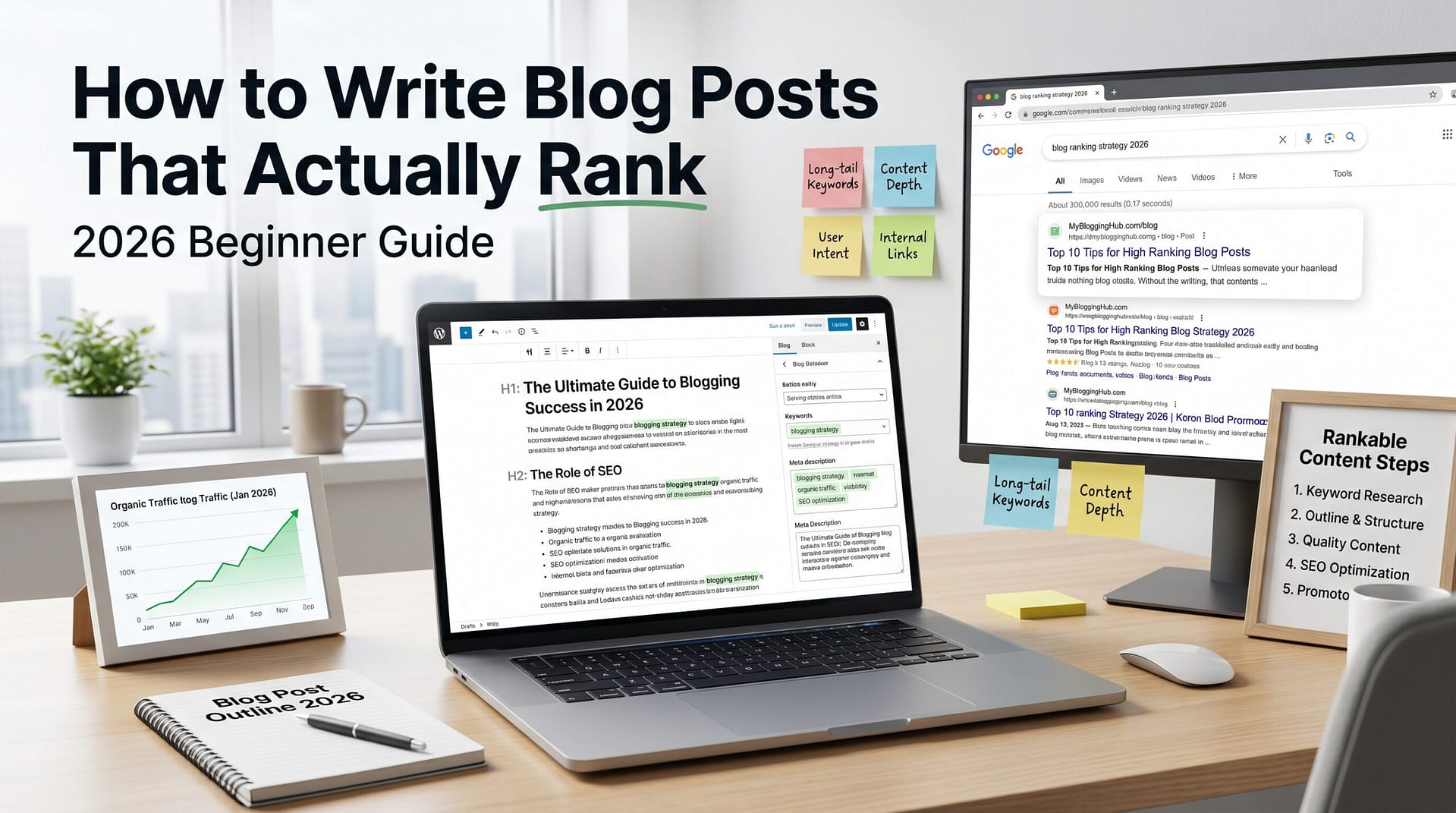
How to Write Blog Posts That Actually Rank
Learn how to turn keyword research into useful, search-friendly content.

How to Get Traffic to a New Website
Discover practical ways to attract visitors and build sustainable traffic.