

If you want your website to get traffic from search engines, one of the most important skills you can learn is keyword research.
But keyword research isn’t about stuffing popular words into your articles or trying to guess exactly what Google wants. It’s about discovering what your audience is actually searching for and finding realistic opportunities to create content that answers those searches better than the alternatives.
For beginners, this can seem complicated. You may find thousands of potential keywords and have no idea which ones are worth targeting. Some have enormous search volume but intense competition. Others look promising but don’t match what your audience actually needs.
The good news is that you don’t need expensive software or advanced SEO knowledge to get started.
You need a practical system for finding keyword ideas, understanding search intent, evaluating competition, and choosing keywords that make sense for your website.
In this guide, you’ll learn how to do keyword research step by step—even if you’re starting from scratch. We’ll cover how to find keyword ideas, how to determine whether a keyword is worth targeting, how to identify lower-competition opportunities, and how to turn your research into a content plan.
By the end, you’ll have a simple process you can use to find better topics and build content with a much clearer purpose.
Let’s start with the basics: what exactly is keyword research?
What Is Keyword Research?
Keyword research is the process of finding and analyzing the words and phrases people type into search engines when they’re looking for information, answers, products, or solutions.
These words and phrases are called keywords or search queries.
For example, imagine you have a website about camping. Someone might search for:
- best camping tent for beginners
- how to set up a tent
- best sleeping bag for cold weather
- camping cookware for beginners
- how to choose a camping chair
Each of these searches represents a potential content opportunity.
Keyword research helps you discover those opportunities before you start writing.
It’s More Than Finding Popular Keywords
One of the biggest mistakes beginners make is assuming that the best keyword is simply the one with the highest search volume.
That’s rarely the case.
A keyword getting 100,000 searches per month might sound fantastic, but if the search results are dominated by huge websites with years of authority, ranking for that keyword could be extremely difficult.
Meanwhile, a keyword with only a few hundred searches each month might be much easier to rank for—and could bring highly targeted visitors to your website.
That’s why effective keyword research considers several factors, including:
- Search volume — How often people search for the keyword.
- Competition — How difficult it may be to rank for the search.
- Search intent — What the person is actually trying to accomplish.
- Relevance — How closely the keyword relates to your website and audience.
- Business value — Whether the search could eventually lead to a useful action, such as clicking an affiliate link, joining your email list, or purchasing a product.
The goal isn’t to find the biggest keyword.
The goal is to find the right keyword.
Keywords Can Be Short or Specific
Keywords come in many forms.
A broad keyword might be:
camping tents
A more specific keyword could be:
best 2 person camping tents for beginners
And an even more specific search might be:
best 2 person camping tent for rainy weather
The more specific the search becomes, the fewer people may search for it. However, those searchers often have a much clearer idea of what they want.
These more specific searches are commonly called long-tail keywords, and they can be especially valuable for newer websites.
Keyword Research Is Really Topic Research
There’s another important way to think about keyword research.
You’re not simply collecting a list of words.
You’re discovering questions your audience has, problems they want to solve, and topics they care about.
That makes keyword research one of the most useful tools you have for planning your content.
Instead of sitting down and asking:
“What should I write about?”
You can start with a much better question:
“What is my audience already searching for?”
That shift can make your entire content strategy more focused.
And once you understand what people are searching for, the next step is understanding why they’re searching for it.
That’s where search intent comes in.
Why Keyword Research Matters
You can write an excellent article and still get very little search traffic if you’re targeting a topic nobody is searching for—or one that’s far too competitive for your website.
That’s why you should do keyword research before you start writing, not afterward.
Good keyword research helps you make smarter decisions about what content to create, who you’re creating it for, and what you can realistically compete for in search results.
1. It Helps You Create Content People Actually Want
Without keyword research, content ideas often come from personal experience, assumptions, or whatever sounds interesting.
Those ideas aren’t necessarily bad. But they may not match what your audience is looking for.
Keyword research gives you evidence.
If people are consistently searching for questions such as:
- how to start a website
- best hosting for beginners
- how to get traffic to a new website
- keyword research for beginners
you have a strong indication that these are topics worth addressing.
You’re no longer guessing what your audience wants.
2. It Helps You Find Realistic Opportunities
Not every keyword is a good target for every website.
A brand-new website probably shouldn’t begin by competing for extremely broad searches dominated by major publications, established brands, and high-authority websites.
Instead, you can look for more specific keywords where the competition may be more manageable.
For example, instead of targeting:
camping
you might target:
best camping tents for beginners
And instead of simply targeting:
SEO
you might target:
SEO for affiliate marketing beginners
The more specific topic gives you a clearer audience and a more focused piece of content.
3. It Helps You Understand Your Audience
Keywords reveal more than what people type into Google.
They can also tell you what people care about, struggle with, and want to accomplish.
Consider the difference between these searches:
- keyword research
- how to do keyword research
- best keyword research tools
- free keyword research tools for beginners
Each search suggests a different need.
Someone searching “keyword research” may simply be learning about the subject.
Someone searching “how to do keyword research” wants instructions.
Someone searching for “best keyword research tools” may be comparing solutions.
And someone searching for “free keyword research tools for beginners” has already narrowed down exactly what they want.
Understanding these differences helps you create content that better matches the person behind the search.
4. It Gives Your Content a Clearer Purpose
A good keyword can provide a starting point for an entire article.
Instead of creating a vague post about “website traffic,” for example, you might discover an opportunity around:
free traffic for affiliate marketing
Now you have a much clearer direction.
You can build the article around the problems, questions, and solutions associated with that search.
This makes it easier to create a focused headline, structure your headings, choose related topics, and write content that satisfies the reader.
5. It Supports a Larger Content Strategy
Keyword research becomes even more powerful when you stop looking at keywords individually.
Instead, look for groups of related topics.
For example, a website about affiliate marketing might create content around:
Main topic: Affiliate marketing SEO
Supporting topics:
- keyword research for beginners
- best keyword research tools
- long-tail keywords
- search intent
- how to write SEO-friendly blog posts
- free traffic strategies
Related articles can be connected through internal links.
Over time, you’re not just publishing random blog posts. You’re building a content network around topics your audience is actively searching for.
6. It Can Help You Attract More Targeted Visitors
Traffic alone isn’t the goal.
You want visitors who are genuinely interested in what you offer.
Someone searching for “best keyword research tools for affiliate marketing” is much more relevant to an affiliate marketing website than someone who randomly lands on the site through an unrelated high-volume keyword.
More relevant traffic can lead to better engagement, more page views, email subscribers, affiliate clicks, and eventually more revenue.
The Bottom Line
Keyword research helps answer one of the most important questions in content marketing:
What should I create to help the people I’m trying to reach?
It doesn’t guarantee that an article will rank. Search engines consider many factors, and rankings can take time.
But keyword research gives your content strategy a much stronger foundation.
Once you understand the importance of keywords, the next step is learning how keywords actually work in search engine optimization.
How Keywords Work in SEO
Once you understand what keywords are and why they matter, the next step is understanding how they fit into search engine optimization (SEO).
At its simplest, SEO is about helping search engines understand your content and helping your content provide a useful answer to what someone is searching for.
Keywords play an important role in that process.
However, modern SEO isn’t about repeating the same keyword over and over. Search engines have become much better at understanding topics, context, related concepts, and search intent.
Your goal should be to create content that naturally covers the topic while clearly addressing the searcher’s needs.
Your Primary Keyword
Most articles should have a primary keyword—the main search phrase that represents the topic you’re trying to cover.
For example, if you’re writing an article about finding keywords, your primary keyword might be:
keyword research for beginners
That phrase gives your article a clear focus.
You might naturally use it in important places such as:
- The page title
- The introduction
- A relevant heading
- The URL or slug
- The meta description
- The body of the article
- The conclusion, when appropriate
You don’t need to force the keyword into every section.
If it sounds unnatural, don’t use it.
Write for people first and use the keyword where it genuinely makes sense.
Secondary and Related Keywords
Your primary keyword isn’t the only phrase that matters.
As you research a topic, you’ll often discover related searches and variations that help you understand the subject more completely.
For example, an article targeting keyword research for beginners might naturally cover related concepts such as:
- how to do keyword research
- keyword research tools
- long-tail keywords
- low-competition keywords
- search volume
- keyword difficulty
- search intent
- finding keyword ideas
These aren’t necessarily separate keywords you need to force into your article.
Instead, they represent related concepts and questions that may help you create a more useful resource.
Long-Tail Keywords
Long-tail keywords are usually more specific search phrases, often containing several words.
For example:
Broad keyword:
camping tents
More specific keyword:
best camping tents for beginners
Long-tail example:
best 4 person camping tent for beginners
Long-tail keywords often have lower search volume than broad keywords, but they can be valuable because they provide more information about what the searcher wants.
A person searching for “best 4 person camping tent for beginners” has already given you several clues about their needs.
That makes it easier to create highly relevant content.
Keyword Variations Matter
Not everyone uses the same words when searching for something.
People often phrase their searches differently.
Someone might search for:
- best keyword research tools
- keyword research software
- SEO keyword tools
- tools for finding keywords
- free keyword research tools
These searches are different, but they’re closely related.
You don’t necessarily need a separate article for every variation.
A well-written article can naturally address several related searches when they share the same underlying topic and intent.
This is one reason you shouldn’t build your content strategy around inserting exact-match keywords into every paragraph.
Where Keywords Matter Most
While you shouldn’t obsess over keyword placement, some locations are particularly useful for communicating the page topic.
These include:
Title: Clearly tells readers and search engines what the page is about.
URL: A short, descriptive URL can reinforce the topic.
Introduction: Establishes the subject early.
Headings: Help organize the content and clarify the questions being answered.
Body content: Provides the actual information readers are looking for.
Image alt text: Can describe relevant images when appropriate. Describe the image accurately rather than using it to stuff keywords.
The important word here is naturally.
If you’re adding keywords simply because you think you have to, you’re probably doing too much.
Don’t Chase a Perfect Keyword Density
You may come across recommendations that tell you a keyword should appear a specific number of times or make up a certain percentage of your article.
Don’t build your content around a magic keyword-density number.
No magic percentage ensures you’ll rank well.
Instead, use your primary keyword naturally and make sure the article thoroughly covers the topic.
If your article is genuinely about keyword research for beginners, the subject will naturally appear throughout.
You don’t need to repeat the exact phrase dozens of times to prove what the article is about.
Think in Topics, Not Just Keywords
This is one of the most important concepts for beginners to understand.
A keyword gives you a target. A topic gives you something useful to teach.
If your keyword is:
how to do keyword research
your article shouldn’t simply repeat that phrase.
It should explain:
- What keyword research is
- Why it matters
- How to find keyword ideas
- How to evaluate those ideas
- How to understand search intent
- How to assess competition
- How to choose a keyword
- What to do with the keyword after you’ve chosen it
That’s how you turn a keyword into a genuinely useful resource.
And there’s one more piece of the puzzle that can make an enormous difference:
Understanding what the person actually wants when they search.
That’s called search intent, and it’s one of the most important concepts in keyword research.
Search Intent: The Secret to Choosing Better Keywords
Finding a keyword with decent search volume is only part of the job.
Before you decide to target it, you need to understand why someone is searching for it.
That is called search intent.
Search intent is the underlying reason behind a search query—the information, answer, solution, or action the person is looking for.
Understanding intent helps you create content that matches what searchers actually want.
That matters because even if you manage to rank for a keyword, your article won’t perform well if it doesn’t satisfy the reason someone searched for it in the first place.
The Four Common Types of Search Intent
Most searches can be grouped into four broad categories.
1. Informational Intent
The person is looking for information or an answer.
Examples include:
- what is keyword research
- how does SEO work
- how to start a blog
- how to choose a camping tent
- what is affiliate marketing
These searches are usually a good fit for guides, tutorials, explanations, and educational articles.
If someone searches “how to do keyword research,” they aren’t necessarily looking to buy something. They want to learn how to do it.
Your content should give them a useful answer.
2. Commercial Investigation
The person is checking out alternatives before finalizing their choice.
Examples include:
- best keyword research tools
- best hosting for beginners
- best laptops for blogging
- SEMrush vs Ahrefs
- best email marketing platforms
These searches can be particularly valuable for affiliate websites because the searcher may be getting closer to making a purchase.
Still, the content should assist them in making a well-informed choice instead of just steering them towards a product.
Comparison articles, reviews, buying guides, and “best” lists often work well for this type of intent.
3. Transactional Intent
The person is ready to take some type of action.
Examples might include searches such as:
- buy camping tent online
- purchase keyword research software
- Bluehost pricing
- Ahrefs free trial
The searcher may already know what they want and be looking for the best place or opportunity to complete the action.
Pages targeting these searches often focus on products, services, pricing, offers, or purchasing options.
4. Navigational Intent
The person is trying to reach a specific website, brand, or page.
Examples include:
- Google Search Console
- Amazon
- Wealthy Affiliate login
- YouTube
- WordPress
In these cases, the searcher generally knows where they want to go.
Trying to create an informational article around a strongly navigational search usually doesn’t make much sense.
Why Search Intent Matters
Imagine you find a keyword with thousands of monthly searches.
At first glance, it looks like a fantastic opportunity.
But then you search for the keyword yourself and discover that every result is a product page.
If you decide to write a 3,000-word beginner tutorial instead, you might end up addressing a totally different question than what the search engine results are meant to answer.
The keyword wasn’t necessarily bad.
You got the keyword interpretation wrong.
That’s why one of the simplest and most useful keyword research habits is to search the keyword yourself before committing to an article.
Look at the Search Results
Once you’ve found a potential keyword, search for it in Google or another search engine.
Then examine the results.
Ask yourself:
- What types of pages are ranking?
- Are they tutorials or product pages?
- Are they comparison articles?
- Are they category or shopping pages?
- What questions do the top results answer?
- How comprehensive are the current results?
- Does my website have something genuinely useful to add?
You aren’t trying to copy the top-ranking pages.
You’re trying to understand what the search engine believes the searcher wants.
Search Intent Can Change How You Write the Article
Consider these two keywords:
“keyword research”
and
“best keyword research tools for affiliate marketing”
They’re related, but the intent is different.
The first could be informational. The searcher may want to understand the concept.
The second is more commercially focused. The searcher is likely comparing tools and looking for recommendations.
Those two keywords could require completely different articles.
This is why keyword research and content planning should work together.
A Simple Search Intent Test
Before choosing a keyword, ask:
“If someone searched this phrase, what would they expect to find?”
Then ask:
“Can I create something that genuinely gives them what they’re looking for?”
If the answer is yes, you’ve probably found a promising opportunity.
If the answer is no, move on.
There’s no shortage of keywords.
Your job isn’t to target every possible search. It’s to find the searches that fit your audience, your website, and the content you can realistically create.
Once you understand search intent, keyword research becomes much more strategic.
Now it’s time to start finding the actual keyword ideas you can work with.
How to Find Keyword Ideas
Once you understand search intent, it’s time to start finding keyword ideas.
The good news is that you don’t need an expensive SEO platform to generate your first list.
In fact, some of the best keyword ideas can come directly from your audience, your niche, and the search results themselves.
The goal at this stage isn’t to decide which keywords you’ll target.
It’s simply to build a list of possibilities that you can evaluate later.
1. Start With Your Main Topic
Begin with a broad topic related to your website.
For example, if your website focuses on affiliate marketing, your starting topics might include:
- affiliate marketing
- SEO
- keyword research
- blogging
- website traffic
- content creation
If your website focuses on camping, you might start with:
- camping tents
- sleeping bags
- camping food
- camping stoves
- camping safety
These broad topics give you somewhere to start, but they’re usually too general to target directly on a newer website.
The next step is expanding them into specific questions and phrases.
2. Use Google’s Search Suggestions
One of the easiest ways to find keyword ideas is to start typing a topic into Google.
Google may automatically suggest searches as you type.
For example, typing:
keyword research for
might produce suggestions related to beginners, SEO, tools, or specific platforms.
These suggestions can reveal what people are actually searching for.
You can also look at the “People also ask” questions that appear in search results.
These can provide excellent ideas for:
- New articles
- Article sections
- Frequently asked questions
- Supporting content
You aren’t required to use every suggestion as a keyword.
Think of them as clues about what your audience wants to know.
3. Study the Search Results
Search your broad topic and look closely at the pages that appear.
Pay attention to:
- Article titles
- Headings
- Questions being answered
- Related topics
- Comparison terms
- Common phrases
For example, if you’re researching “affiliate marketing,” you might discover topics such as:
- affiliate marketing for beginners
- how affiliate marketing works
- how to choose affiliate products
- affiliate marketing SEO
- affiliate marketing traffic
- affiliate marketing tools
The search results can help you discover angles you might not have considered.
4. Think About Your Audience’s Questions
Put yourself in your reader’s position.
What questions would a beginner ask?
If your website teaches people how to build online businesses, they might ask:
- How do I start a website?
- What is the best website platform?
- How much does hosting cost?
- How do I get traffic?
- How do I find keywords?
- How do I write articles that rank?
These questions can become keyword ideas and, eventually, complete articles.
This is one reason knowing your audience is so important.
The better you understand their problems, the easier it becomes to find useful content opportunities.
5. Use Online Communities
Forums, social media discussions, question-and-answer sites, and niche communities can provide another source of ideas.
Look for questions that people repeatedly ask.
Pay attention to phrases such as:
- “How do I…”
- “What’s the best…”
- “Why isn’t…”
- “Where can I…”
- “Should I…”
- “What’s the difference between…”
These questions often reveal problems people are actively trying to solve.
You can then turn those problems into potential search-focused content.
6. Use Keyword Research Tools
Once you’ve generated some initial ideas, keyword research tools can help you expand and evaluate them.
Depending on the tool, you may be able to see information such as:
- Estimated search volume
- Keyword difficulty
- Related keywords
- Search trends
- Search intent
- Competing pages
- Keyword variations
There are both free and paid tools available.
You don’t need to use every tool available. In fact, using too many tools can make the process more confusing for beginners.
It’s better to choose one or two tools you understand and use them consistently.
If you want to compare your options, see our guide to Best Keyword Research Tools for Affiliate Marketing (Free & Paid).
7. Look for Questions and Problems
Some of the best keywords aren’t obvious commercial phrases.
They may be questions or problems.
For example:
“best keyword research tool” is an obvious comparison keyword.
But:
“how do I find keywords with low competition”
could lead to a highly useful educational article.
Likewise:
“best hosting for beginners”
is commercially focused, while:
“how does website hosting work”
addresses a beginner’s informational need.
Both can be valuable.
The important thing is understanding what your audience needs and creating content that genuinely helps.
8. Keep a Running Keyword List
Don’t throw away keyword ideas just because you aren’t ready to write about them today.
Create a simple spreadsheet, document, or note where you can save potential topics.
For each idea, you might record:
| Keyword Idea | Intent | Topic | Possible Article |
|---|---|---|---|
| keyword research for beginners | Informational | SEO | Beginner guide |
| best keyword research tools | Commercial | SEO Tools | Comparison |
| how to find low competition keywords | Informational | Keyword Research | Tutorial |
| free keyword research tools | Commercial | SEO Tools | Tools guide |
You don’t need to fill in every column immediately.
The purpose is to build a content opportunity list that you can return to whenever you’re planning future articles.
Don’t Judge Ideas Too Early
At this stage, resist the temptation to eliminate keywords simply because they have low search volume or because you aren’t sure whether they’re competitive.
You haven’t evaluated them yet.
First, collect ideas.
Then you’ll analyze them based on search volume, competition, relevance, intent, and potential value.
That separation makes the process much easier.
Finding keyword ideas is about quantity. Choosing the right keywords is about quality.
And that’s what we’ll tackle next.
How to Evaluate Keywords
Finding keyword ideas is only the beginning.
Once you have a list of potential keywords, you need to decide which ones are actually worth pursuing.
This is where keyword evaluation comes in.
A good keyword isn’t necessarily the one with the most searches. You want to find keywords that are relevant, realistic, and valuable for your particular website.
Here are the most important factors to consider.
1. Relevance
Start with the simplest question:
Does this keyword actually fit my website and my audience?
If your website teaches beginners about affiliate marketing, a keyword about advanced enterprise SEO software may not be the best fit—even if it gets plenty of searches.
Likewise, a keyword can be closely related to your niche but still be irrelevant to a particular article.
Your content should have a clear connection to what your website is about and what your readers need.
Relevance should come before search volume.
2. Search Intent
Next, determine what the searcher is trying to accomplish.
Is the person:
- Looking for information?
- Trying to solve a problem?
- Comparing products?
- Looking for a specific website?
- Ready to make a purchase?
If the intent doesn’t match the type of content you want to create, the keyword may not be a good target.
Remember: you aren’t just targeting a phrase. You’re trying to satisfy a specific need behind that phrase.
3. Search Volume
Search volume estimates how many times people search for a particular keyword during a given period.
Higher search volume can mean more potential traffic.
But higher isn’t automatically better.
A keyword with 20,000 monthly searches might be extremely difficult to rank for, while a keyword with 200 searches might be much more realistic for a smaller website.
And if those 200 searchers are highly interested in what you offer, that traffic may be far more valuable.
Think of search volume as one data point, not the final decision.
4. Competition
You also need to consider how difficult it may be to compete for the keyword.
Look at the pages currently ranking.
Are they:
- Major established websites?
- Well-known brands?
- Highly authoritative publications?
- Specialized niche websites?
- Small or relatively new websites?
If every result comes from enormous, established websites with extremely comprehensive content, the keyword may be difficult to target.
But if you see smaller websites ranking well, that can be an encouraging sign.
You don’t need to avoid competitive keywords forever.
You simply need to be realistic about where your website is today.
5. Keyword Difficulty
Many keyword research tools provide a keyword difficulty score.
This is an estimate of how difficult it may be to rank for a particular search term.
Different tools calculate this score differently, so don’t treat the number as an absolute measurement.
For example, one tool might label a keyword as “easy” while another considers it “moderate.”
Use difficulty scores as guidance, then look at the actual search results.
The real competition is the pages already ranking.
6. Traffic Potential
Search volume tells you about searches for a keyword, but it doesn’t necessarily tell you how much traffic a page could receive.
A single article can sometimes rank for dozens—or even hundreds—of related searches.
For example, an article targeting:
how to find low competition keywords
might also appear for related searches involving:
- low competition keywords
- finding easy keywords
- keyword competition
- low difficulty keywords
- finding keywords for a new website
This is one reason it’s better to create a comprehensive resource around a topic rather than obsessing over one exact phrase.
7. Business or Affiliate Value
If you’re building an affiliate website, you should also consider whether the keyword has a meaningful connection to your business goals.
For example:
what is keyword research?
is primarily informational.
But:
best keyword research tools for affiliate marketing
has much stronger commercial potential.
That doesn’t mean you should only create commercial content.
Informational articles can attract people earlier in their journey and introduce them to your website. They can then connect to more commercially focused content through internal links.
A healthy content strategy can include both.
8. Your Ability to Create Better Content
Finally, ask yourself an important question:
Can I create something genuinely useful for this search?
You don’t need to be the world’s foremost expert.
But you should have something valuable to contribute.
That could be:
- A clearer explanation
- A beginner-friendly process
- Practical examples
- Firsthand experience
- Helpful comparisons
- Better organization
- Answers to questions competing pages overlook
If you can’t provide meaningful value, a keyword probably isn’t worth pursuing simply because the numbers look attractive.
Don’t Let One Metric Make the Decision
It’s tempting to look at a keyword tool and immediately sort everything by search volume or keyword difficulty.
Try not to do that.
Instead, evaluate each promising keyword as a combination of factors:
Relevance + Intent + Competition + Search Volume + Value + Content Opportunity
A keyword doesn’t have to score perfectly in every category.
You are looking for the best overall opportunity for your website right now.
A Simple Keyword Evaluation Checklist
Before choosing a keyword, ask:
- Is it relevant to my audience?
- Do I understand the search intent?
- Can I create the type of content the searcher expects?
- Is the competition realistic for my website?
- Does the search volume provide enough potential value?
- Could the page attract related searches?
- Does the topic support my overall content strategy?
- Can I provide something genuinely useful?
If most of the answers are yes, you’ve probably found a keyword worth investigating further.
And if you’re building a newer website, there’s one particular type of keyword you should pay close attention to: low-competition keywords.
How to Find Low-Competition Keywords
If you’re building a newer website, one of the smartest approaches to keyword research is to look for low-competition keywords.
These are search terms where you may have a more realistic opportunity to compete in search results.
That doesn’t mean every low-competition keyword will be easy to rank for. There are no guaranteed rankings.
Instead, the goal is to find keywords where the balance between search demand, competition, relevance, and content quality makes sense for your website.
What Is a Low-Competition Keyword?
A low-competition keyword is generally a search term where fewer strong or highly authoritative pages are competing for the same search.
For example, consider the difference between:
affiliate marketing
and:
how to choose affiliate products for beginners
The first is extremely broad and likely has substantial competition.
The second is much more specific.
It targets a particular audience and a particular problem.
That specificity can make it a more realistic content opportunity, especially for a newer website.
Start With Specific Searches
One of the easiest ways to find lower-competition opportunities is to move from broad topics toward more specific searches.
For example:
Broad:
SEO
More specific:
SEO for affiliate marketing
Even more specific:
SEO for affiliate marketing beginners
The more specific phrase may have less search volume, but it also tells you much more about the person searching.
That allows you to create content specifically designed for that audience.
Look for Long-Tail Keywords
Long-tail keywords are often useful when you’re searching for lower-competition opportunities.
Consider these examples:
- website hosting
- best website hosting
- best website hosting for beginners
- best affordable website hosting for beginner bloggers
The final phrase is much more specific than the first.
It may attract fewer searches, but someone using that search has already told you quite a bit about what they’re looking for.
That’s valuable information.
Use Keyword Tools for Clues
Keyword research tools can help identify potential low-competition keywords by showing metrics such as:
- Keyword difficulty
- Search volume
- Competition estimates
- Related keywords
- Search trends
These metrics are useful for narrowing down your list.
But don’t blindly trust a difficulty score.
Different tools use different calculations, and none of them can perfectly predict whether your particular page will rank.
Use the numbers as clues—not guarantees.
Check the Actual Search Results
This is one of the most important steps.
After finding a promising keyword, search for it yourself.
Look at the pages currently ranking.
Ask:
- Are the top results from huge, established websites?
- Are smaller niche websites ranking?
- Do the current articles actually answer the searcher’s question well?
- Are the results outdated?
- Are there obvious gaps in the information?
- Could I create something substantially more useful?
If you see smaller or less-established websites ranking alongside major sites, that can be an encouraging signal.
Likewise, if the existing results are thin, outdated, poorly organized, or don’t fully satisfy the search intent, there may be an opportunity to create something better.
Don’t Assume Low Search Volume Means Low Value
Beginners sometimes dismiss a keyword because its estimated search volume is small.
That’s a mistake.
A keyword with relatively low search volume can still be valuable if:
- The searcher is highly relevant to your audience.
- The topic supports your overall content strategy.
- The keyword has commercial intent.
- The page can rank for related searches.
- The visitor is likely to continue exploring your website.
For example, 100 highly relevant visitors can be more valuable than thousands of visitors who have no interest in what your website offers.
Traffic quality matters as much as traffic quantity.
Look for Questions Your Competitors Don’t Answer Well
Another way to uncover opportunities is to identify gaps in existing content.
Suppose the top-ranking articles all explain what keyword research is but don’t clearly show beginners how to actually perform it.
That could be your opportunity.
You could create an article that:
- Explains the concept simply.
- Provides a step-by-step process.
- Shows practical examples.
- Explains common mistakes.
- Gives readers an action plan.
You’re not trying to manipulate the search results.
You’re simply looking for ways to serve the searcher better.
Build Around Topics, Not Just Tiny Keywords
There’s a balance to find here.
You don’t want to create a separate article for every slightly different keyword variation.
For example, these might all belong naturally in one comprehensive article:
- keyword research for beginners
- how to do keyword research
- beginner keyword research
- how to find keywords
If the search intent is essentially the same, one strong article may be better than four thin articles.
Think about the topic and the searcher’s need, then use related keywords naturally throughout the content.
Low Competition Doesn’t Mean Zero Competition
It’s important to keep expectations realistic.
A keyword labeled “low competition” can still have competing pages.
And even when a keyword appears easy to target, your article may not immediately rank.
SEO takes time, and rankings depend on many factors beyond the keyword itself.
Your goal isn’t to find a magical list of keywords where nobody else is competing.
Your goal is to find realistic opportunities where your website has a reasonable chance to provide a useful answer and earn visibility.
A Simple Low-Competition Formula
When evaluating potential keywords, think about this:
Specific topic + Clear search intent + Relevant audience + Manageable competition + Helpful content opportunity
The more of these factors that line up, the more interesting the keyword becomes.
And remember: you don’t need to win the biggest keyword to build a successful website.
A collection of smaller, highly relevant search opportunities can gradually build meaningful traffic—and those pages can strengthen your overall content strategy as your website grows.
Once you’ve identified promising keywords, the next challenge is deciding which one should become the primary keyword for each article.
A Practical Keyword-Finding Workflow
If keyword research feels overwhelming, use a simple process instead of trying to find the perfect keyword immediately.
Here is a practical workflow you can repeat for almost any topic.
Step 1: Start with a broad topic
Choose a subject that is directly related to your website.
For an affiliate marketing website, that might be:
affiliate marketing
Don’t worry about choosing the final keyword yet. You’re simply establishing a starting point.
Step 2: Turn the topic into specific questions
Think about what your audience might want to know.
For example:
- How does affiliate marketing work?
- How do I start affiliate marketing?
- How do I find affiliate products?
- How do I get traffic to an affiliate website?
- How do I use SEO for affiliate marketing?
Now you have several potential content directions.
Step 3: Expand your ideas
Use Google suggestions, related searches, online communities, and keyword research tools to find additional variations.
You might discover ideas such as:
- affiliate marketing for beginners
- affiliate marketing without a website
- affiliate marketing SEO
- free traffic for affiliate marketing
- keyword research for affiliate marketing
- best affiliate marketing tools
Add promising ideas to your keyword list.
Step 4: Identify the search intent
For each keyword, ask:
What is the person actually trying to accomplish?
Mark each idea as informational, commercial investigation, transactional, or navigational.
This immediately helps you determine what type of content would make sense.
Step 5: Check the competition
Search the keyword and examine the current results.
Look for opportunities where:
- The ranking pages aren’t all enormous websites.
- Smaller niche websites are competing successfully.
- Existing content doesn’t fully answer the question.
- The results are outdated or incomplete.
- You can create a more useful resource.
Step 6: Check the keyword data
Now use your preferred keyword research tool to examine available metrics.
Look at:
- Search volume
- Keyword difficulty
- Related keywords
- Search trends
- Potential traffic
- Commercial value
Don’t let one number make the decision for you.
Step 7: Choose the best opportunity
Compare your strongest candidates and choose the keyword that offers the best overall combination of:
Relevance + Search Intent + Competition + Search Demand + Value
A keyword doesn’t need enormous search volume to be worthwhile.
It needs to make sense for your website and your audience.
Step 8: Turn the keyword into a content idea
Once you’ve selected a keyword, decide what the actual article should accomplish.
For example:
Keyword: how to find low competition keywords
Article idea: A beginner-friendly guide showing exactly how to discover, evaluate, and choose lower-competition keyword opportunities.
Now you have more than a keyword.
You have a content plan.
Your Simple Keyword-Finding Routine
You can summarize the entire process like this:
Topic → Questions → Keyword Ideas → Search Intent → Competition → Keyword Data → Best Opportunity → Content
Save this workflow and use it every time you’re planning new content.
The more you practice it, the faster you’ll become at recognizing good keyword opportunities.
And remember: keyword research isn’t about finding the perfect keyword. It’s about finding a useful topic that your audience is searching for and that your website has a realistic opportunity to serve well.
How to Choose the Right Keyword for a Blog Post
Once you’ve researched a list of potential keywords, you still have one important decision to make:
Which keyword should you actually target with your article?
This is where many beginners make things more complicated than they need to be.
You don’t need to find a keyword with perfect numbers.
You need to find a keyword that gives your article a clear purpose, matches the searcher’s intent, and makes sense for your website.
Start With the Main Topic
First, identify the primary question or problem your article will address.
For example, suppose you want to write an article teaching beginners how to perform keyword research.
You might have several related keyword ideas:
- keyword research
- keyword research for beginners
- how to do keyword research
- beginner keyword research
- how to find keywords
These phrases are closely related, but you still need to choose the primary keyword that best represents the article.
In this example, keyword research for beginners could be a strong primary target because it clearly communicates both the subject and the intended audience.
Match the Keyword to the Article
Your primary keyword should accurately describe what the article delivers.
If your keyword is:
how to find low-competition keywords
the article should actually teach the reader how to find them.
It shouldn’t primarily be a list of keyword research tools or a general explanation of SEO.
This sounds obvious, but it’s an easy mistake to make when you’re researching dozens of related phrases.
Always ask:
If someone searches this keyword, will my article give them exactly what they expect?
If the answer is no, choose a different keyword—or change the article.
Consider Search Intent Before Search Volume
Search volume can be useful, but intent should come first.
Imagine you have two possible keywords:
keyword research tools
and
how to do keyword research
The first suggests that the searcher may be looking for software or comparing tools.
The second suggests that the person wants to learn the process.
If you’re writing a step-by-step tutorial, the second keyword is likely a much better fit—even if the first keyword has higher search volume.
The best keyword is the one that matches the content you’re actually trying to create.
Look at the Existing Search Results
Before making your final choice, search the keyword.
This gives you an opportunity to see whether your planned article matches the type of content already ranking.
For example, if the results are mostly:
- Product pages
- Pricing pages
- Comparison articles
but you’re planning a beginner tutorial, you may be targeting the wrong search intent.
On the other hand, if the results contain several beginner guides and educational articles, your planned content may be a strong match.
You’re looking for alignment between:
Keyword → Search Intent → Search Results → Your Article
When those four things line up, you have a much stronger foundation.
Consider Your Website’s Current Position
Your website’s size and authority can also influence which keywords make sense.
A newer or smaller website may want to focus more heavily on specific, lower-competition opportunities.
As the site builds authority and earns more visibility, you can gradually pursue broader and more competitive topics.
This doesn’t mean you should permanently avoid competitive keywords.
It simply means your keyword strategy should evolve as your website grows.
Don’t Try to Target Everything With One Article
Another common mistake is trying to make one article rank for dozens of unrelated keywords.
Instead, choose:
One primary keyword and a group of closely related topics.
For example:
Primary keyword:
keyword research for beginners
Related topics:
- how to do keyword research
- long-tail keywords
- search intent
- keyword difficulty
- low-competition keywords
- keyword research tools
These supporting concepts make the article more comprehensive without turning it into a collection of unrelated subjects.
Think About the Reader, Not Just the Keyword
Here’s a useful test.
Forget the keyword for a moment and ask:
What does this person need help with?
If someone searches:
best hosting for beginners
they probably don’t want a 2,000-word history of web hosting.
They want help choosing a hosting provider.
If someone searches:
how to get traffic to a new website
they probably want practical strategies they can actually implement.
Your keyword is the doorway.
The content is what makes the visit worthwhile.
A Simple Keyword Selection Formula
When you’re deciding between several potential keywords, look for the one that best combines:
Relevance + Search Intent + Realistic Competition + Search Demand + Content Opportunity
You can even score each factor from 1 to 5 if you’re comparing several ideas.
You don’t need a complicated spreadsheet.
A simple comparison can be enough to reveal which keyword makes the most sense.
Give Every Article a Clear Primary Target
Once you’ve made your decision, commit to it.
Choose one primary keyword that represents the article.
Then use related phrases naturally throughout the content.
This gives you a clear target without forcing you to repeat the same phrase unnaturally.
And don’t be afraid to adjust your choice.
Keyword research is not a one-time decision carved in stone. As you learn more about the topic, search results, and audience, you may discover that another keyword is a better fit.
The goal is to make the best strategic choice you can with the information available.
Once you’ve chosen that primary keyword, the next question is one beginners ask all the time:
How many keywords should you actually target in one article?
Keyword Selection Worksheet
When you have several keyword ideas that could work for the same article, use this simple worksheet to compare them.
You can copy this into a spreadsheet or document and reuse it for every new article.
| Keyword | Relevance (1–5) | Intent Match (1–5) | Competition (1–5) | Search Demand (1–5) | Content Opportunity (1–5) | Total |
|---|---|---|---|---|---|---|
| Keyword 1 | ||||||
| Keyword 2 | ||||||
| Keyword 3 | ||||||
| Keyword 4 |
For competition, give a higher score to keywords that appear more realistic for your website to compete for.
For the other categories, a higher score means the keyword is a stronger fit.
How to Use the Worksheet
Let’s say you’re planning an article about keyword research and you’re considering:
- keyword research
- keyword research for beginners
- how to do keyword research
- keyword research for new websites
You could score each one based on what you’ve learned from your research.
For example:
| Keyword | Relevance | Intent Match | Competition | Search Demand | Content Opportunity | Total |
|---|---|---|---|---|---|---|
| keyword research | 5 | 4 | 1 | 5 | 3 | 18 |
| keyword research for beginners | 5 | 5 | 4 | 3 | 5 | 22 |
| how to do keyword research | 5 | 5 | 3 | 4 | 5 | 22 |
| keyword research for new websites | 5 | 5 | 5 | 2 | 5 | 22 |
The numbers aren’t meant to be scientifically precise.
They’re simply a way to organize your thinking.
If two keywords score similarly, look more closely at the actual search results and decide which one provides the clearest focus for your article.
Your Final Keyword Check
Before you commit to a primary keyword, answer these five questions:
1. Is this keyword directly relevant to my audience?
2. Does my planned article match the search intent?
3. Is the competition realistic for my website?
4. Is there enough search demand or potential value to justify creating the content?
5. Can I create something genuinely useful for the person searching?
If you can confidently answer yes to all five, you have a strong candidate.
Remember, the worksheet isn’t designed to produce a mathematically perfect answer.
It’s designed to help you make a better, more deliberate decision instead of choosing a keyword simply because it has the highest search volume.
Once you’ve selected your primary keyword, keep your focus clear and let the supporting topics naturally strengthen the article.
How Many Keywords Should You Target?
One of the most common questions beginners ask is:
How many keywords should I target in one article?
The short answer is:
Start with one primary keyword and a group of closely related terms and topics.
You don’t need to assign a separate keyword to every paragraph, heading, or sentence.
Focus on One Primary Keyword
Your primary keyword should represent the main topic of the article.
For example, if you’re writing a guide about keyword research, you might choose:
keyword research for beginners
That gives the article a clear focus.
You can then naturally cover related concepts such as:
- how to do keyword research
- long-tail keywords
- search intent
- keyword difficulty
- low-competition keywords
- keyword research tools
These related terms help you cover the subject thoroughly without turning the article into a collection of unrelated keyword targets.
Don’t Create a Separate Article for Every Keyword Variation
Imagine you discover these keywords:
- keyword research for beginners
- beginner keyword research
- how to do keyword research
- keyword research guide for beginners
If the search intent behind all four is essentially the same, creating four separate articles may not be the best approach.
One comprehensive article could address all of them naturally.
This can give readers a better experience and prevent your website from filling up with multiple pages that compete with one another for very similar searches.
Let Related Keywords Occur Naturally
You don’t need to force related keywords into your article.
If you’re genuinely covering the topic, many related terms will naturally appear.
For example, an article about keyword research might naturally mention:
- search volume
- search intent
- keyword competition
- long-tail keywords
- keyword difficulty
- SEO tools
- content strategy
You don’t have to write a sentence simply because a keyword tool told you to include a particular phrase.
Write naturally first. Optimize thoughtfully second.
Avoid Keyword Stuffing
Keyword stuffing means excessively repeating keywords in an attempt to influence search rankings.
For example, a sentence like this would be awkward:
“Keyword research for beginners is important because keyword research for beginners helps beginners learn keyword research for beginners.”
Nobody wants to read that.
And repeating a keyword excessively doesn’t make an article more useful.
Instead, use your primary keyword where it naturally fits and focus on explaining the topic clearly.
Think About Topic Coverage
Rather than asking:
“How many keywords can I fit into this article?”
ask:
“What does this reader need to understand before their question is fully answered?”
That question leads to much better content.
If your primary topic is keyword research, readers may need to understand:
- What keyword research is
- Why it matters
- How to find keyword ideas
- How to evaluate keywords
- Search intent
- Competition
- Long-tail keywords
- How to choose a primary keyword
Those supporting concepts make the article stronger because they serve the reader—not because they increase a keyword count.
When Should You Create a Separate Article?
Sometimes a related keyword deserves its own page.
A good rule is to consider creating a separate article when the keyword represents a meaningfully different search intent or topic.
For example:
Keyword research for beginners
might deserve a comprehensive educational guide.
But:
best keyword research tools for affiliate marketing
has a more commercially focused intent and may deserve its own comparison article.
That’s exactly why related content can work together through internal links.
One article teaches the concept.
Another helps the reader choose a tool.
Another might explain how to use the tool.
Together, they create a stronger content ecosystem.
A Simple Rule to Remember
For most articles, think:
1 primary keyword + closely related terms + comprehensive topic coverage
That’s enough.
You don’t need to chase 20, 50, or 100 keywords for every article.
Your goal is to create the best possible resource for the searcher’s underlying question.
When you focus on relevance, intent, and helpful content, the keywords become part of the strategy rather than the entire strategy.
And once you understand how many keywords to target, it’s important to recognize the mistakes that can undermine otherwise good keyword research.
A Practical Keyword-Count Example
Imagine you are writing an article called “Keyword Research for Beginners.”
Instead of trying to target 15–20 separate keywords, you might organize your keyword list like this:
| Keyword | Role |
|---|---|
| keyword research for beginners | Primary keyword |
| how to do keyword research | Related keyword |
| keyword research tutorial | Related keyword |
| how to find keywords | Related keyword |
| finding keywords for SEO | Related keyword |
| keyword research tips | Related keyword |
Your article would focus primarily on “keyword research for beginners.” The other phrases would be covered naturally as you explain the topic.
For example, a section about finding keyword ideas might naturally include “how to find keywords,” while a section explaining the process could naturally address “how to do keyword research.”
You do not need to repeat each phrase a specific number of times. You simply want the article to thoroughly cover the subject and naturally use the language your audience uses when searching.
Now imagine you discover another keyword: “best keyword research tools for affiliate marketing.”
That probably deserves its own article because the search intent is different. Someone searching for a beginner keyword research guide wants to learn the process. Someone searching for the best keyword research tools is looking for specific software recommendations.
This gives you a simple structure:
One article:
Primary keyword → keyword research for beginners
Related terms → how to do keyword research, keyword research tutorial, how to find keywords
Another article:
Primary keyword → best keyword research tools for affiliate marketing
Related terms → keyword research tools, free keyword research tools, paid keyword research tools
The goal is not to see how many keywords you can squeeze into one article. The goal is to determine which keywords belong together because they share the same topic and search intent.
That approach helps keep your content focused while also giving search engines enough context to understand what your page is about.
Common Keyword Research Mistakes
Keyword research doesn’t have to be complicated, but there are several mistakes that can make it much less effective.
The good news is that most of them are easy to avoid once you know what to look for.
1. Choosing Keywords Only Because They Have High Search Volume
High search volume can look attractive, especially when you’re just getting started.
If a keyword gets thousands of searches every month, it may seem like the obvious choice.
But high search volume often comes with high competition.
A new or smaller website may have a much better opportunity with a more specific keyword that gets fewer searches but is easier to compete for.
For example:
Best camping tents
may have significant search demand but also substantial competition.
Best camping tents for beginners
is more specific and may better match the audience you’re trying to reach.
Don’t automatically choose the keyword with the biggest numbers.
Choose the best opportunity for your website.
2. Ignoring Search Intent
A keyword can look perfect on paper and still be a poor target if your content doesn’t match what searchers want.
Before choosing a keyword, ask:
What is someone actually trying to accomplish when they search this phrase?
If the search results are dominated by product pages and comparison guides, a short introductory definition may struggle to compete.
Likewise, if people are looking for a detailed tutorial, a thin product page probably won’t satisfy their intent.
Search intent should influence both which keyword you choose and what type of content you create.
3. Targeting Keywords That Are Too Competitive
One of the biggest beginner mistakes is trying to compete immediately for extremely broad keywords.
For example, a new website might target:
SEO
instead of starting with something more specific such as:
SEO for small business websites
The broader keyword may have more searches, but that doesn’t necessarily make it the better target.
As your website builds authority and earns more quality content and links, you can gradually pursue more competitive opportunities.
Start where you have a realistic chance to compete.
4. Trusting Keyword Tool Metrics Too Much
Keyword research tools are extremely useful, but their numbers aren’t absolute guarantees.
Search volume, keyword difficulty, traffic estimates, and other metrics are estimates or calculated scores.
Two tools may even give you different numbers for the same keyword.
Use these metrics to compare opportunities and identify patterns—but don’t let a single number make the decision for you.
The actual search results still matter.
5. Not Checking the Search Results Yourself
This is one of the simplest and most valuable steps in keyword research.
After finding a promising keyword, search for it yourself.
Look at:
- What types of pages are ranking
- How closely those pages match the search intent
- How comprehensive the existing content is
- Whether the results are dominated by major websites
- What questions the current results answer
- Whether you can create something genuinely more useful
Your keyword tool can tell you about the keyword.
The search results can tell you about the competition.
Use both.
6. Trying to Force Keywords Into Your Content
Once you’ve researched keywords, it can be tempting to make sure every phrase appears repeatedly.
Don’t.
Search engines have become much better at understanding topics, context, related concepts, and natural language.
If a keyword fits naturally, use it.
If another phrase communicates the same idea more naturally, use that instead.
Your reader should never feel like you’re writing for a keyword counter.
Write for people first. Optimize for search second.
7. Choosing Keywords That Don’t Fit Your Audience
A keyword can have excellent search volume and relatively low competition and still be the wrong keyword for your website.
Ask yourself:
Would the person searching this keyword actually benefit from what my website offers?
If the answer is no, move on.
Your goal isn’t simply to attract visitors.
It’s to attract the right visitors.
Relevant traffic is far more valuable than traffic that arrives at your site only to discover that your content isn’t what they needed.
8. Creating Multiple Articles for the Same Search Intent
Finding several similar keywords can make you think you need several separate articles.
Not necessarily.
If several keywords represent essentially the same question or search intent, one comprehensive article may be the better solution.
For example:
- how to do keyword research
- keyword research for beginners
- beginner keyword research guide
- how beginners can do keyword research
These may be different phrases, but they could all be addressed effectively by one strong resource.
Creating multiple pages targeting the same intent can create unnecessary overlap and make your content strategy harder to manage.
Before creating another article, ask:
Does this keyword represent a genuinely different topic or search intent?
If it doesn’t, consider strengthening the existing article instead.
9. Chasing Too Many Keywords at Once
More keywords don’t automatically mean more traffic.
Trying to target dozens of unrelated keywords in one article can make the content unfocused.
Instead, give each article a clear primary topic.
Then cover the important supporting questions and related concepts that naturally belong with it.
This creates content that is easier for readers to follow and easier for you to build into a larger content strategy.
10. Forgetting About the Bigger Content Strategy
Keyword research shouldn’t happen in isolation.
One keyword may lead naturally to several related topics.
For example:
Keyword research for beginners
could lead to:
- Best Keyword Research Tools for Affiliate Marketing
- How to Write Blog Posts That Actually Rank
- SEO for Affiliate Marketing
- How to Choose Low-Competition Keywords
- How to Find Content Ideas
These articles can support one another through internal links.
Instead of thinking about keyword research as finding individual keywords, think about it as building a road map for your content.
11. Never Revisiting Your Keyword Research
Keyword research isn’t something you do once and forget forever.
Your website will grow.
Your audience may change.
Search behavior can change.
New topics can emerge.
And some of your existing content may begin ranking for keywords you never intentionally targeted.
Periodically review your content and keyword opportunities.
You may discover that an existing article deserves an update, a new section, a stronger internal-linking structure, or even a separate supporting article.
A Quick Keyword Research Mistake Check
Before committing to a keyword, ask yourself:
- Am I choosing this keyword because it has high search volume—or because it’s a good opportunity?
- Does my content match the search intent?
- Is the competition realistic for my website?
- Have I actually looked at the search results?
- Does this keyword fit my audience?
- Am I forcing too many keywords into one article?
- Do similar keywords belong in the same article?
- Could this topic connect naturally with other content on my site?
- Is there a real opportunity to create something useful or better?
If you can answer these questions confidently, you’re already avoiding many of the most common keyword research mistakes.
The goal isn’t to build the biggest keyword list.
The goal is to make better decisions about what content to create.
And once you know what mistakes to avoid, you can turn everything you’ve learned so far into a simple, repeatable keyword research workflow.
A Simple Beginner Keyword Research Workflow
If keyword research still feels overwhelming, don’t try to use every technique at once.
Start with this simple workflow.
Step 1: Choose a Broad Topic
Start with something your audience cares about.
For example:
Keyword research
Don’t worry about finding the perfect keyword yet. You’re simply choosing the general subject.
Step 2: Brainstorm Specific Questions
Think about what someone might want to know about that topic.
For example:
- What is keyword research?
- How do I find keywords?
- How do I know if a keyword is competitive?
- What are long-tail keywords?
- What keyword research tools should I use?
These questions give you potential content ideas.
Step 3: Turn Questions Into Keyword Ideas
Use Google suggestions, related searches, keyword research tools, forums, communities, and your own audience knowledge to expand your list.
You might discover keywords such as:
- keyword research for beginners
- how to do keyword research
- how to find keywords
- low-competition keywords
- long-tail keywords
- best keyword research tools
At this point, you’re collecting possibilities—not making final decisions.
Step 4: Identify Search Intent
For each promising keyword, ask:
What does the searcher actually want?
Are they trying to learn something, compare options, find a specific website, or make a purchase?
Choose keywords where your planned content matches that intent.
Step 5: Check the Search Results
Search the keyword yourself.
Look at the pages currently ranking and ask:
- Are they answering the same question?
- Are they comprehensive?
- Are major websites dominating the results?
- Is there something important they don’t cover well?
- Could I create a more useful resource?
This step helps you understand the real competition.
Step 6: Check Keyword Data
Now use your keyword research tool to review useful metrics such as:
- Search volume
- Keyword difficulty
- Competition
- Related keywords
- Traffic potential
- Trends
- Commercial or affiliate value
Don’t obsess over one number.
Use the data to help you compare opportunities.
Step 7: Choose One Primary Keyword
Select the keyword that provides the best overall opportunity.
A strong choice usually has:
Good relevance + matching search intent + realistic competition + meaningful demand + a clear content opportunity
That becomes the primary keyword for your article.
Step 8: Build the Article Around the Topic
Finally, create the best resource you can for the person searching.
Use your primary keyword naturally and cover the important related questions and concepts.
Don’t write an article simply to include keywords.
Write an article that deserves to rank for the topic.
The Beginner Workflow at a Glance
You can remember the entire process with this simple sequence:
Topic → Questions → Keyword Ideas → Search Intent → Competition → Keyword Data → Primary Keyword → Content
That’s it.
You don’t need a complicated spreadsheet or an expensive SEO platform to get started.
As you become more experienced, you can add more advanced research techniques. But this basic workflow is enough to help you make much better content decisions from the beginning.
The most important thing is to use the process consistently.
Research before you write, choose intentionally, and create content that genuinely helps the person searching.
Your Keyword Research Action Plan
Knowing how keyword research works is useful.
Actually doing it is what moves your website forward.
You don’t need to research hundreds of keywords before publishing your next article. Start with one topic and work through a simple action plan.
Step 1: Choose One Topic
Pick a topic that is:
- Relevant to your audience
- Related to your website
- Something you can explain or help with
- Worth creating content about
Don’t worry about finding the perfect topic. Choose a useful starting point.
Step 2: Find 5–10 Keyword Ideas
Use Google, keyword research tools, related searches, forums, communities, and your own knowledge of your audience.
Write down the ideas without judging them too quickly.
Step 3: Narrow Your List
For each keyword, ask:
Is it relevant?
Does the search intent match the content I want to create?
Is the competition realistic?
Is there enough demand or value to make the topic worthwhile?
Can I create something genuinely helpful?
Remove the ideas that don’t make sense.
Step 4: Choose Your Primary Keyword
Pick the keyword that gives you the best overall opportunity.
Remember that the highest-volume keyword isn’t automatically the best choice.
A more specific keyword with a clear audience and manageable competition may be much more useful.
Step 5: Plan the Article
Write down the main questions your article should answer.
Then organize those questions into logical sections.
Your primary keyword gives the article its central focus.
The supporting questions give it depth.
Step 6: Create the Best Version You Can
Write for the person who searched for the topic.
Make the information clear.
Answer the important questions.
Use examples where they help.
Add relevant internal links.
And use your keywords naturally rather than forcing them into every section.
Step 7: Record What You Learn
Keep track of the keywords you target and the content you create.
Over time, you’ll start to see patterns.
Some topics may attract traffic.
Others may generate little interest.
Some articles may rank for several related searches.
Those observations can help improve your future keyword research.
Your Simple Keyword Research Checklist
Before publishing your next article, make sure you can check these boxes:
- I chose a topic relevant to my audience.
- I found several keyword ideas.
- I checked the search intent.
- I looked at the actual search results.
- I considered competition and search demand.
- I chose one primary keyword.
- I identified useful related topics and questions.
- My article directly answers the searcher’s needs.
- I used keywords naturally.
- I connected the article to relevant content on my website.
That’s enough to get started.
You can make your process more advanced as your skills and website grow, but you don’t need a complicated system to make better keyword decisions today.
Start small. Research thoughtfully. Create useful content. Then learn from the results.
That’s how keyword research becomes a skill instead of just another SEO task.
Conclusion
Keyword research doesn’t have to be complicated.
At its core, it’s about understanding what your audience is searching for, why they’re searching for it, and whether your website can provide a useful answer.
The goal isn’t to find the biggest keyword or build the longest keyword list.
It’s to find the right opportunities.
As you plan your content, remember the fundamentals:
- Start with topics your audience cares about.
- Find specific keyword ideas.
- Understand search intent.
- Consider search demand and competition.
- Look at the actual search results.
- Choose one primary keyword for each article.
- Use related terms naturally.
- Create content that genuinely helps the reader.
- Connect related content with internal links.
- Review what you learn and improve over time.
You also don’t need an expensive SEO platform to begin.
Free search features, your knowledge of your audience, and a simple keyword research process can take you a long way.
As your website grows, your research skills will grow with it. You’ll become better at recognizing promising topics, understanding search intent, judging competition, and turning keyword ideas into useful content.
Most importantly, don’t let keyword research become an excuse to delay publishing.
Research enough to make a smart decision, then create something valuable.
Find the opportunity. Understand the searcher. Build the resource.
That’s how keyword research becomes a practical part of building a website that earns search traffic over time.
Your Next Step
Don’t close this guide and simply move on to another SEO article.
Use what you just learned.
Choose one topic you want to write about and spend 15–30 minutes researching it.
Find several keyword ideas, check the search results, identify the search intent, and choose one primary keyword.
Then create the article.
You don’t need a perfect keyword.
You need a good opportunity and a genuinely useful piece of content.
Once you’ve done this a few times, keyword research will become much easier—and you’ll have a repeatable process you can use for every new article you publish.
Frequently Asked Questions About Keyword Research
Keyword research is the process of finding and evaluating the words and phrases people use when searching online.
It helps you understand what your audience wants to know so you can create content that matches their needs and search intent.
Keyword research helps you choose topics that people are actually searching for.
It can also help you understand search intent, evaluate competition, find realistic opportunities, and create content that is more closely aligned with what your audience wants.
For most articles, start with one primary keyword and a collection of closely related keywords, questions, and concepts.
You don’t need to target dozens of unrelated keywords.
Focus on thoroughly answering the main topic and naturally covering the related information your reader needs.
A long-tail keyword is generally a more specific search phrase rather than a broad, generic term.
For example:
Camping tents
is broad, while:
best camping tents for beginners
is more specific.
Long-tail searches often have lower search volume, but they can provide clearer intent and more realistic opportunities for smaller or newer websites.
Not necessarily.
High-volume keywords can attract a lot of searches, but they may also have significantly more competition.
Beginners should consider the overall opportunity rather than choosing a keyword simply because it has the highest search volume.
A more specific keyword with lower competition may be a better starting point.
Keyword research tools can provide useful difficulty and competition estimates, but you should also examine the actual search results.
Look at the websites currently ranking, the quality of their content, how closely they match the search intent, and whether you can realistically create something more useful.
There is no universal competition score that makes a keyword automatically impossible.
No.
Paid tools can provide valuable data and advanced features, but beginners can start with free search features, basic keyword tools, and manual research.
As your website grows, you may decide that a paid tool saves enough time or provides enough additional information to justify the cost.
No.
Use your primary keyword naturally in important areas of the page, but don’t force it into every paragraph.
Search engines can understand related terms and concepts, so focus on writing naturally and covering the topic thoroughly.
Yes.
A well-written article can appear in search results for many related keywords and variations.
That’s one reason you shouldn’t create a separate article for every slightly different keyword phrase.
If several keywords share the same search intent, one comprehensive article may be able to address all of them.
In most cases, before writing.
Researching first can help you choose a worthwhile topic, understand the searcher’s intent, identify important questions, and plan an article that has a clear purpose.
You can—and should—continue learning from keyword data after the article is published as well.
You should research keywords whenever you’re planning new content, and periodically revisit existing content to look for new opportunities.
As your website grows, your rankings, audience, and content strategy can reveal new topics worth exploring.
Don’t lose sight of the person behind the search.
Keyword research isn’t about collecting as many keywords as possible.
It’s about understanding what people want, finding realistic opportunities, and creating content that genuinely helps them.
The best keyword is not necessarily the one with the biggest numbers. It’s the one that represents a valuable topic you can realistically serve well.
Related Articles
Now that you understand how keyword research works, the next step is putting those keywords to work as part of a larger content strategy.
These guides can help you continue building your SEO and affiliate marketing skills.

SEO for Affiliate Marketing: A Beginner’s Step-by-Step System
Learn how SEO fits into affiliate marketing and how to build a search-focused content strategy that attracts targeted visitors over time.

Best Keyword Research Tools for Affiliate Marketing (Free & Paid)
Learn how SEO fits into affiliate marketing and how to build a search-focused content strategy that can attract targeted visitors over time.
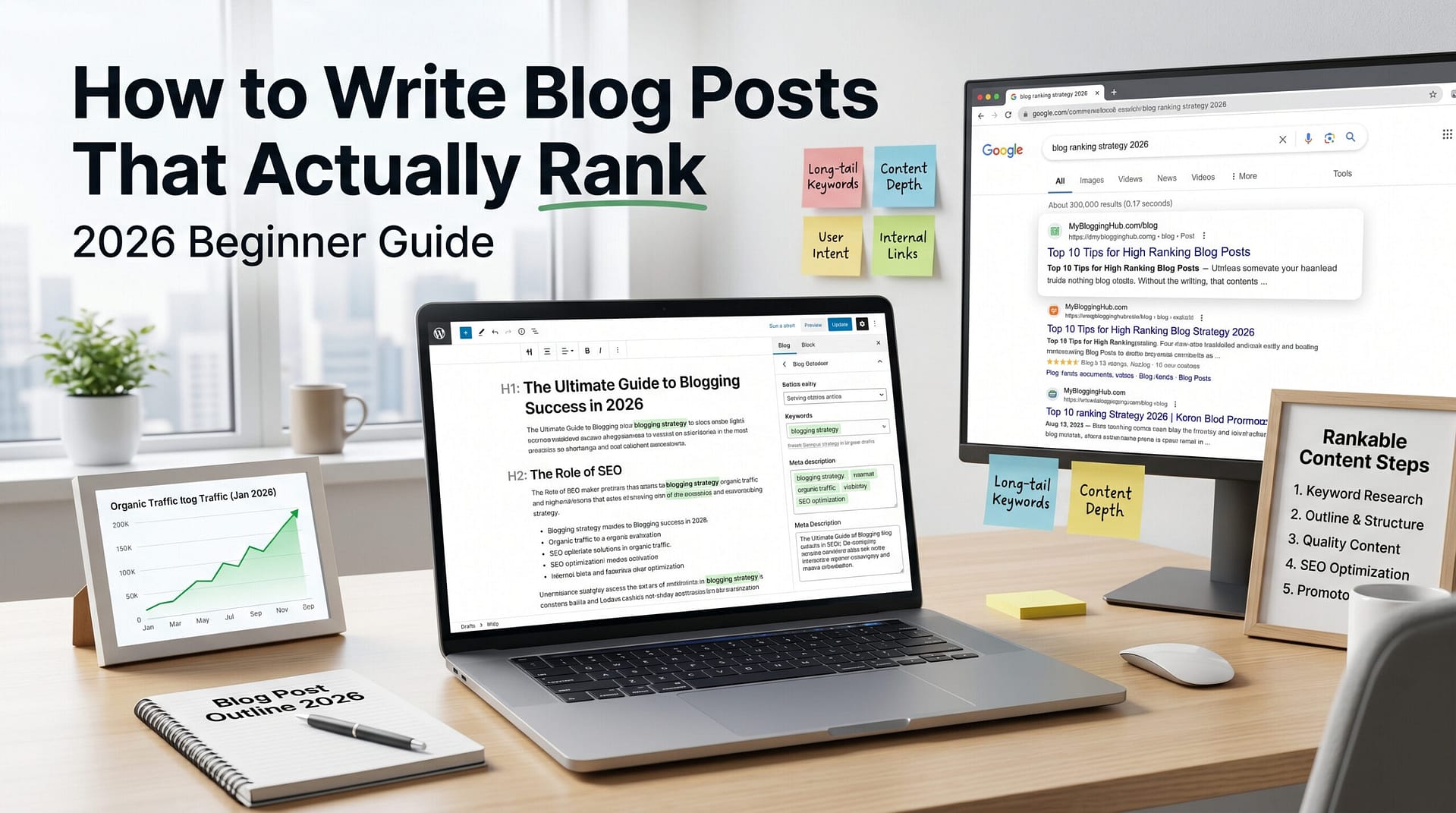
How to Write Blog Posts That Actually Rank (2026 Beginner Guide)
Learn how SEO fits into affiliate marketing and how to build a search-focused content strategy that can attract targeted visitors over time.

How to Get Traffic to a New Website
Keyword research is one part of the traffic-building process. This guide covers additional ways beginners can attract visitors while their SEO strategy develops.

How to Start a Website in 2026
If you’re still building your online business foundation, start here. This beginner guide walks you through the basic process of creating a website and getting it ready to publish content.

SEO Basics for Beginners (2026): How to Get Traffic to Your Website
Learn how to apply SEO (Search Engine Optimization) and get your website to show up in search engines like Google Search—without paying for ads and what to focus on first.
Keep Building Your SEO Skills
Keyword research becomes more valuable when you connect it with the rest of your content strategy.
Start with one topic, find a realistic keyword opportunity, create something genuinely useful, and then build related content around it.
One useful article can become the starting point for an entire content network.